
Steel sourcing is easier to manage when every supplier prices the same approved requirements. Start with a controlled material schedule, then compare technical scope, documents, delivery assumptions and commercial exclusions before looking at the total price.
The workflow below is for project buyers preparing and comparing enquiries. It does not replace design approval, product verification or destination-specific import advice.
In this guide
- 1. Issue a clear enquiry
- 2. Make offers comparable
- 3. Review evidence and substitutions
- 4. Confirm the shipment strategy
- 5. Release and track the order
- 6. Define CanHope’s supply scope
1. Issue a clear enquiry
Assign a BOQ reference to every size and product combination. Attach the latest approved drawings and specifications, quantities and units, required documentation, intended destination and project dates. Mark unresolved items explicitly. Give each bidder the same revision and ask for a line-by-line response.
Separate materials from fabrication, inspection, packing and transport services. For processed parts, include the approved drawing and acceptance requirements. A request for “complete steel supply” leaves too much room for different interpretations of what is included.

2. Make offers comparable
Build a comparison sheet before choosing a supplier. Record missing answers as open points, not as compliance. Ask suppliers to separate their base offer from alternatives so a cheaper substituted item is not mistaken for the specified product.
| Compare this | Record for every offer |
|---|---|
| Technical match | BOQ item, offered standard and grade, dimensions, finish, manufacturer/model where relevant, and deviations. |
| Quantity and price basis | Pieces or weight, theoretical or actual mass basis, currency, unit price and quotation validity. |
| Included work | Cutting or fabrication, tests, documentation, packing and labels, with exclusions identified. |
| Timing | Material readiness assumptions, approval dependencies, dispatch estimate and transport estimate separately. |
| Delivery scope | Chosen trade rule and edition, exact named place or port, freight and destination charges included or excluded. |
| Commercial conditions | Payment milestones, inspection arrangements and the agreed process for discrepancies or changes. |
ICC’s Incoterms® 2020 introduction explains that the rules allocate delivery obligations, costs and risk, but do not specify product quality or replace the sales contract. State the chosen rule, named place and edition precisely; keep technical acceptance and payment requirements explicit.
3. Review evidence and substitutions
Check the proposed item, not just the catalogue
Request the documents specified for each item, such as a material report, dimensional record, product datasheet or applicable listing evidence. Check that identifiers and scope correspond to the actual offer. Agree how the supplied goods and packages will be linked to those records.
Resolve exceptions before commitment
Send any different grade, size, finish, connection or manufacturer to the responsible project reviewer. Record acceptance or rejection in the comparison sheet. A supplier’s statement that an alternative is equivalent is not the project’s approval. Keep approval status visible until the issue is closed.
4. Confirm the shipment strategy
Compare consolidated and separate shipments against item readiness and site priorities. Obtain package dimensions and masses, then have the transport parties assess equipment, route limits and unloading access. Do not plan around a fixed steel tonnage per container or assume that consolidating all items produces the lowest total cost.
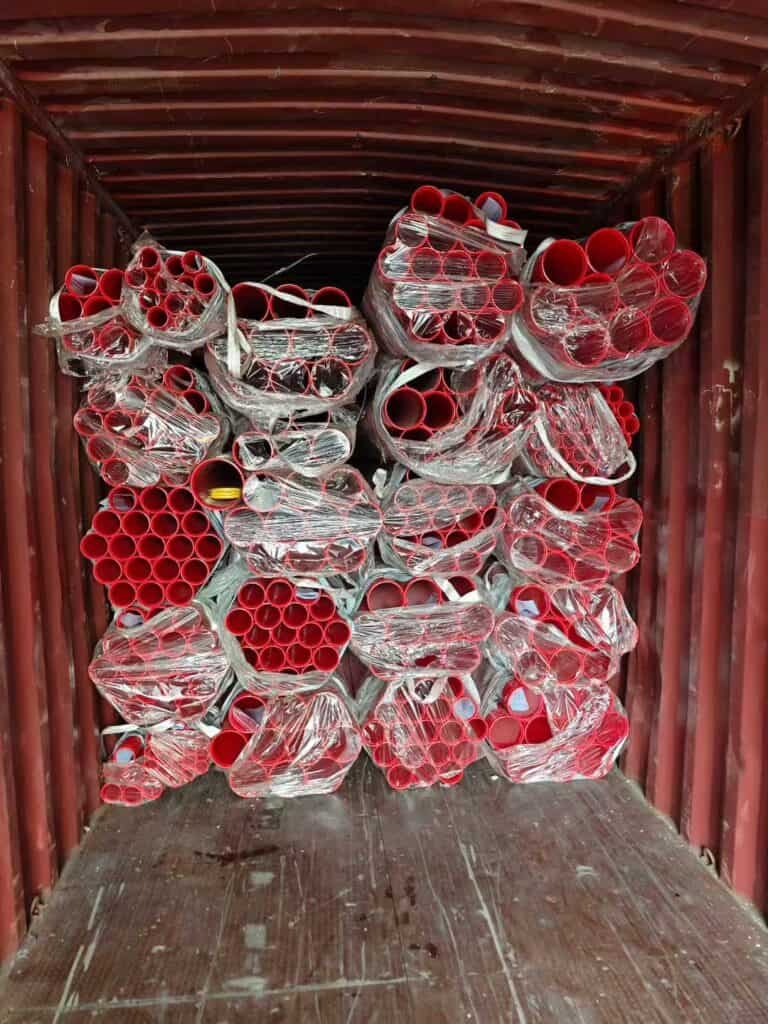
Use our mixed-container feasibility guide for the questions to raise. Loading photographs can illustrate past handling, but do not prove current capacity, transport acceptance or a destination-specific delivery record.
5. Release and track the order
Before issuing the purchase order, close technical deviations, identify approved document revisions and confirm included quantities and services. Agree inspection and document-review stages, package references and the handling of changes. Keep a status tracker for approval, production or procurement, inspection, packing and dispatch instead of treating a single lead-time estimate as a delivery guarantee.
6. Define CanHope’s supply scope
CanHopeSteel has its own galvanized-pipe manufacturing operation and coordinates project BOQs, selected fabrication and conditional mixed loading. These roles do not mean that every offered item is manufactured in-house or that every project material can be supplied.
For fire-protection enquiries, review the project supply package and request an itemized scope. Email your BOQ, specifications and destination to info@canhopesteel.com. Availability, required compliance evidence and delivery assumptions should be confirmed in the actual proposal.