
China’s 2026 steel export-licence change applies to listed products, not automatically to every item described as steel. Overseas buyers should ask the exporter to confirm the classification and document requirements for the actual goods before the order is released.
Source check: 15 October 2026. This is a procurement briefing based on the official sources linked below. The exporter and the destination importer or broker should confirm the applicable requirements for the goods, trade mode and shipment date. It is not a legal determination for an individual order.
In this guide
- What changed in 2026?
- Licence use by trade mode
- Buyer document checklist
- Payment arrangements
- Destination checks
- Prepare an enquiry
What changed on 1 January 2026?
MOFCOM and GACC Announcement No. 79 of 2025 added specified steel products to export-licence management from 1 January 2026. It requires an export contract and a product-quality inspection conformity document issued by the manufacturer to support the application. Consult the announcement’s product list rather than relying only on a broad product name.
The practical first question is therefore: which declared product description and customs commodity code apply to each order line? Ask the exporter to have this checked using the complete technical specification. This article does not assign a code to pipes, fittings, sections or fabricated assemblies.
Does one licence cover every shipment?
Do not turn “one shipment, one licence” into an exception-free rule. The Dongguan Commerce Bureau’s steel-export FAQ, dated 17 March 2026 distinguishes trade modes: the listed products use a single-clearance licence under other trade modes, while processing and compensation trade may use a licence for multiple clearances within its validity, subject to a maximum of 12 uses. The exporter should confirm the applicable mode and licence scope with the issuing authority.
A business’s general export capability and the licence required for particular goods are separate checks. Neither a marketing statement nor a photograph confirms that the proposed shipment has the necessary authorisation.
What should a buyer ask the exporter for?
| Check | Question to resolve before shipment |
|---|---|
| Goods and classification | Which descriptions and commodity codes are proposed, and which lines fall within the applicable licensing requirements? |
| Contract and parties | Who is the contracting seller, exporter and consignee? What is the documented role of any agent? |
| Manufacturer evidence | Who issued the quality document, which goods does it cover, and how will it be linked to the supplied items? |
| Licence arrangements | Who will apply, which goods and quantities will the licence cover, and when will shipment-specific status be confirmed? |
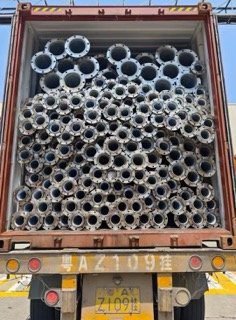
| Packing and transport records | How will descriptions, quantities, weights and package marks be checked across the invoice, packing list and transport document? |
| Destination review | Which documents or product checks does the destination importer or authority require in addition to China-side export arrangements? |
The manufacturer document used in an application should not be described automatically as every mill test certificate or inspection record a project buyer may require. Agree your order’s testing, inspection and traceability requirements separately.


Keep payment terms separate from unsupported legal claims
Agree the currency, payee, payment milestones and banking instructions in the contract. Verify any change of payment details through an established contact channel before transferring funds. Do not assume that a third-party role or an RMB payment, by itself, proves either compliance or non-compliance.
The licensing sources cited here do not establish a universal list of currencies accepted by CanHope or a blanket rule for every buyer’s payment route. Those arrangements require order-specific confirmation, including any requirements of the parties’ banks and relevant authorities.
Export approval does not replace destination checks
A Chinese export licence is not a promise of destination customs release, product approval or a particular duty rate. Ask the destination importer or broker to check the precise product, end use and shipment date before booking. Keep this review separate from the seller’s commercial quotation.

Prepare your enquiry
Send the product specification, quantity, any fabrication drawing, destination and required document list to info@canhopesteel.com. CanHope can review the supply and processing scope, while the shipment’s export and destination requirements are confirmed for the actual order.
For the broader purchasing sequence, see the steel import planning guide. For questions to put to a supplier before releasing an order, use the supplier-document review checklist.
Pingback: 2026年中国钢材出口新规:海外买家必须了解的关键变化 - CanHopeSteel