
Choosing grooved fittings for a fire-protection project starts with the approved design, not just a product name or nominal size. The pipe, groove, coupling, gasket and fitting must form a documented, compatible assembly.
Use this guide to prepare a clearer bill of quantities (BOQ), compare supplier proposals and identify missing information before ordering. It is a procurement checklist, not an installation procedure or a substitute for review by the responsible fire-protection designer and approving authority.
Start here: Check our grooved pipe fittings range for product types. Availability, pressure ratings and certifications must be confirmed for the exact proposed model and size.
In this guide
- 1. Match the fitting to the drawing
- 2. Eight checks before ordering
- 3. BOQ and quotation checklist
- 4. Packing and delivery
- 5. Coordinated project supply
- 6. Technical references
1. Match the fitting to the drawing
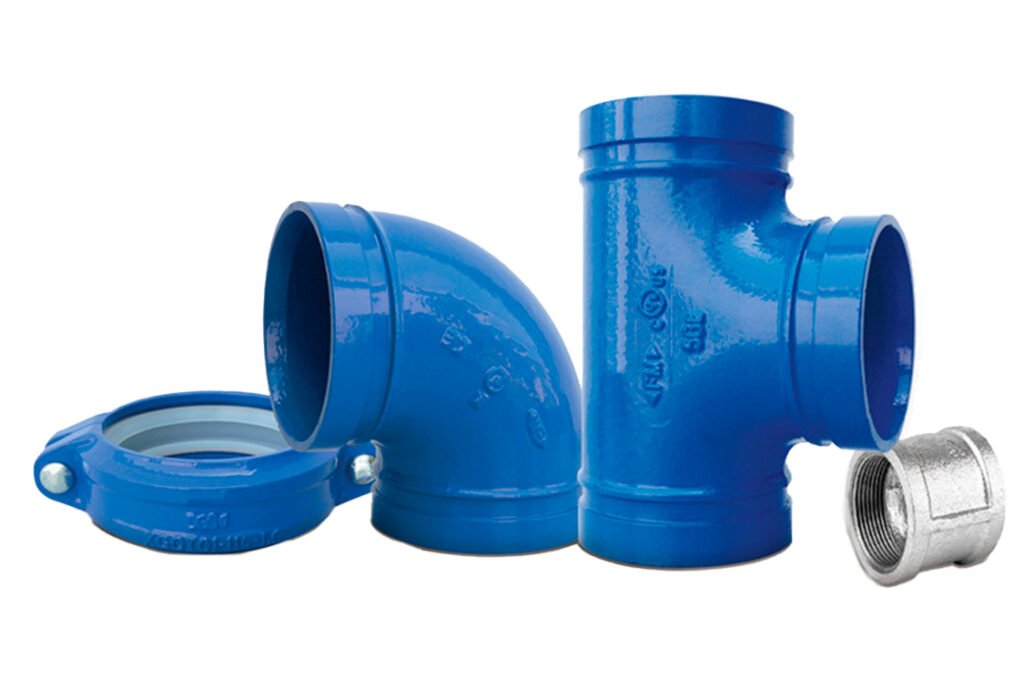
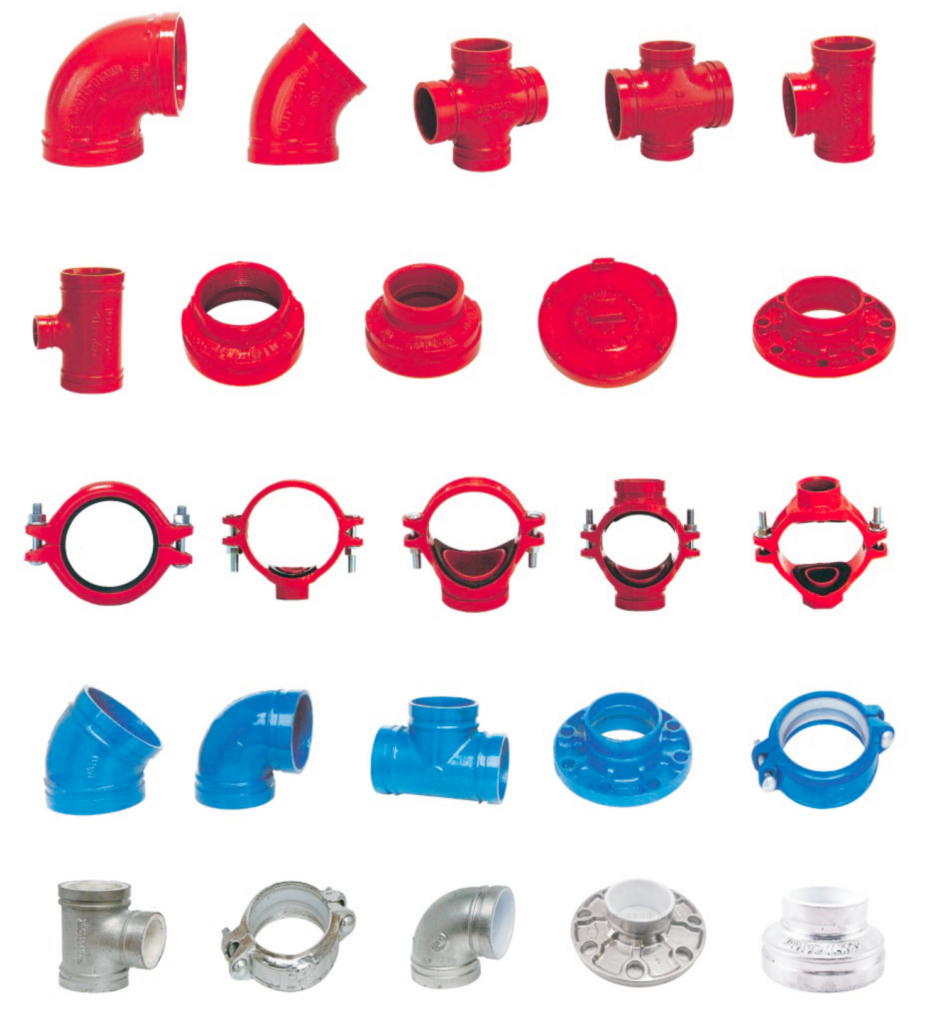
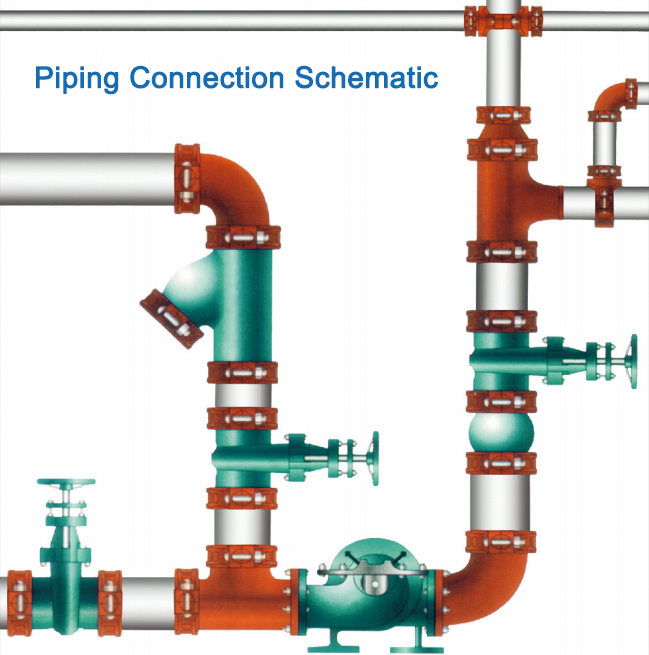
Grooved fittings redirect, branch, reduce or terminate a pipe run. Couplings join compatible grooved ends. Do not assume separately sourced fittings, couplings, gaskets and hardware are interchangeable.
- Couplings: Specify the rigid or flexible type and exact model required by the design.
- Elbows: Confirm angle, size and end connections.
- Tees and reducers: State every inlet and outlet size, not only the main-pipe size. Identify equal/reducing tees and concentric/eccentric reducers as specified.
- Mechanical outlets: Confirm the main-pipe range, branch size, outlet connection and approved application in the selected manufacturer’s documentation.
- Flange adapters: Check the mating flange dimensions, facing and equipment connection requirements.
- End caps: Use the cap and coupling combination permitted by the manufacturer. Do not substitute a visually similar closure.
For introductory terminology, see What Are Grooved Pipe Fittings?.
2. Eight checks before ordering
Check 1: Nominal size and actual outside diameter
List both NPS/DN and actual pipe outside diameter (OD), with units. Match each pipe end to the corresponding fitting and coupling connection dimensions. A description such as “4-inch coupling” is not a complete connection specification. Manufacturer groove tables distinguish nominal sizes, actual ODs and tolerances.
Check 2: Pipe material and wall thickness
Provide the pipe standard, material, schedule or wall thickness, and finish. Confirm that the proposed coupling documentation covers that pipe combination. Do not assume a rating for one pipe material, size or wall thickness applies to another. Keep material standards, wall-thickness schedules and product approvals as separate fields in the BOQ.
Check 3: Groove system and preparation method
Specify the groove profile/system and whether the pipe is roll-grooved or cut-grooved. Check the selected manufacturer’s dimensional requirements, including the gasket seat, groove geometry, permitted wall thickness and, for roll-grooved pipe, pipe-end flare. Do not assume all grooved systems or roll/cut preparations are interchangeable.
The Victaulic OGS groove specification illustrates why OD and groove tolerances matter. Its dimensions apply to the products and pipe preparations it covers, not automatically to another manufacturer’s range.
Check 4: Rigid or flexible coupling
Rigid and flexible couplings have different movement characteristics. Specify the type required by the designer and check the exact model’s limits. A flexible coupling permits only defined movement; it does not by itself establish seismic suitability or accommodate every thermal movement. See the manufacturer’s grooved-joint explanation for the distinction.
Check 5: Gasket and service conditions
State whether the system is wet, dry or another specified service, together with fluid/additives and operating-temperature conditions. Confirm the exact gasket grade, shape, compatibility and lubricant requirements for the selected product. The word “EPDM” alone does not identify every applicable service limitation.
The Victaulic seal selection guide distinguishes gasket grades and limits its chemical guidance to its own compounds. Do not transfer another manufacturer’s gasket colors, ratings or compatibility claims to the offered product.
Check 6: Working pressure and listing/approval
Compare the project pressure requirement against the exact model, size, pipe combination and service covered by the current datasheet. Read rating-table footnotes. Working pressure and test requirements are different checks; do not choose a test pressure from a general article.
Where the project requires UL Listing or FM Approval, request the manufacturer’s name, model, applicable sizes and current listing/approval evidence. Verify the scope, limitations and identification against the proposed goods. A logo on a catalogue cover is not evidence that every item in the shipment is covered.
The Victaulic FireLock submittal is an example of configuration-specific performance tables, not a rating for CanHope-supplied products. Certification searches are available through UL Product iQ and the FM Approval Guide.
Check 7: Complete-assembly compatibility
Confirm that the coupling housings, gasket, fasteners, fittings, end caps and mating pipe are permitted together. Do not infer cross-brand or cross-model compatibility from appearance. Obtain the correct installation instructions for each supplied model and have any proposed substitution reviewed before release.
Check 8: Coating and installation environment
State the required coating and exposure conditions, including indoor/outdoor location and relevant corrosion requirements. Confirm the offered finish against the project specification. Red color, galvanizing or an epoxy finish is not, by itself, proof of a pressure rating, listing or suitability for a particular environment.
3. BOQ and quotation checklist
Use one line for each distinct item and size combination. The following is an enquiry checklist, not a product specification table. Mark missing information as “to be confirmed” rather than asking suppliers to assume it.
| Information to provide | What to identify |
|---|---|
| Item and quantity | BOQ reference, product type, specified manufacturer/model if any, quantity and unit. |
| Pipe and dimensions | NPS/DN plus actual OD; pipe standard, material and wall thickness/schedule. |
| Connection | Every inlet/outlet size; groove system and preparation method; rigid/flexible type; mating flange or thread where applicable. |
| Service and performance | System service, fluid/additives, operating temperature and required working pressure from the design. |
| Evidence required | Current datasheet, installation instructions, required listing/approval scope and project submittal requirements. |
| Finish and delivery | Coating/exposure requirements, packing and labels, destination, required date and delivery terms. |
Before accepting a proposal: Check the offered model against each BOQ line, identify exclusions and alternatives, and obtain designer/approver acceptance where required. Do not treat a quotation, product photograph or supplier statement as engineering approval.
4. Packing and delivery
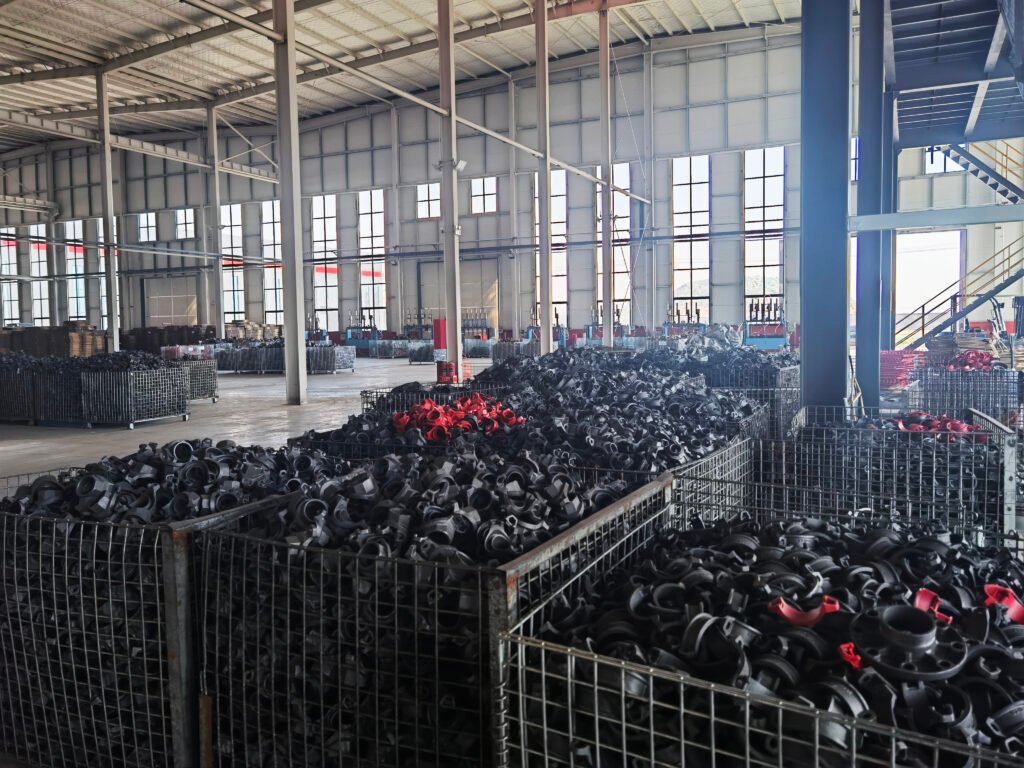
Agree carton, pallet or case arrangements according to the products and order. Confirm item labels, quantities per package, packing-list references and any destination-specific packing requirements. For a mixed shipment, keep pipes, fittings, valves and accessories traceable to the BOQ.
See our packing and container loading examples. These photographs show shipment handling examples, not proof of certification or a promise of identical packing for every order.
5. Coordinated project supply
CanHopeSteel supports BOQ-based procurement of fire-protection materials from China. Depending on the project, a quotation can coordinate pipes, fittings, valves and related materials. Each item still needs its own specification and compliance review.
Related product pages: Grooved pipe fittings · Galvanized steel pipe · Valves.
Some fitting options may be available with UL Listing and/or FM Approval. Confirm the exact manufacturer, model, size and applicable listing/approval scope before ordering. Do not extend a fitting’s approval to valves, sprinklers or the whole material package.
For a project quotation, email your BOQ, approved specification, quantities and delivery requirements to info@canhopesteel.com. Identify any required certification and unresolved technical questions so they can be reviewed before an order is confirmed.
6. Technical references
Manufacturer documents below support the selection checks. They do not identify CanHope as a distributor of those brands or establish certification of CanHope’s offered products. Always use the current documents for the actual manufacturer and model proposed.