
A custom spiral-welded steel pipe order starts with an approved engineering specification and a practical handling plan. Large dimensions affect fabrication, connections, lifting and transport, so the enquiry should include more than the pipe diameter.
For a fire-protection project, the spiral weld pattern alone does not establish suitability. The exact pipe standard, material, dimensions, joint details and required approvals must be accepted for the intended system.
What should be specified for a custom pipe?
| Requirement | Information to provide |
|---|---|
| Service and design basis | Intended use, applicable design/purchase specification and responsible engineering contact. |
| Material and dimensions | Pipe standard/grade, actual outside diameter, wall thickness, length and tolerances. |
| Connections | Required end preparation, mating dimensions and any flange, weld or mechanical-joint details. |
| Surface protection | Internal/external coating or lining, preparation and repair requirements. |
| Inspection | Required examinations/tests, acceptance criteria, traceability and document package. |
| Quantity and delivery | Piece schedule, destination, delivery terms and receiving-site restrictions. |
The name “spiral welded” identifies a manufacturing form, not a universal pressure class. Do not assume a generic steel-pipe standard or a coating description is enough. If an alternative is proposed, document the engineer’s acceptance before production.
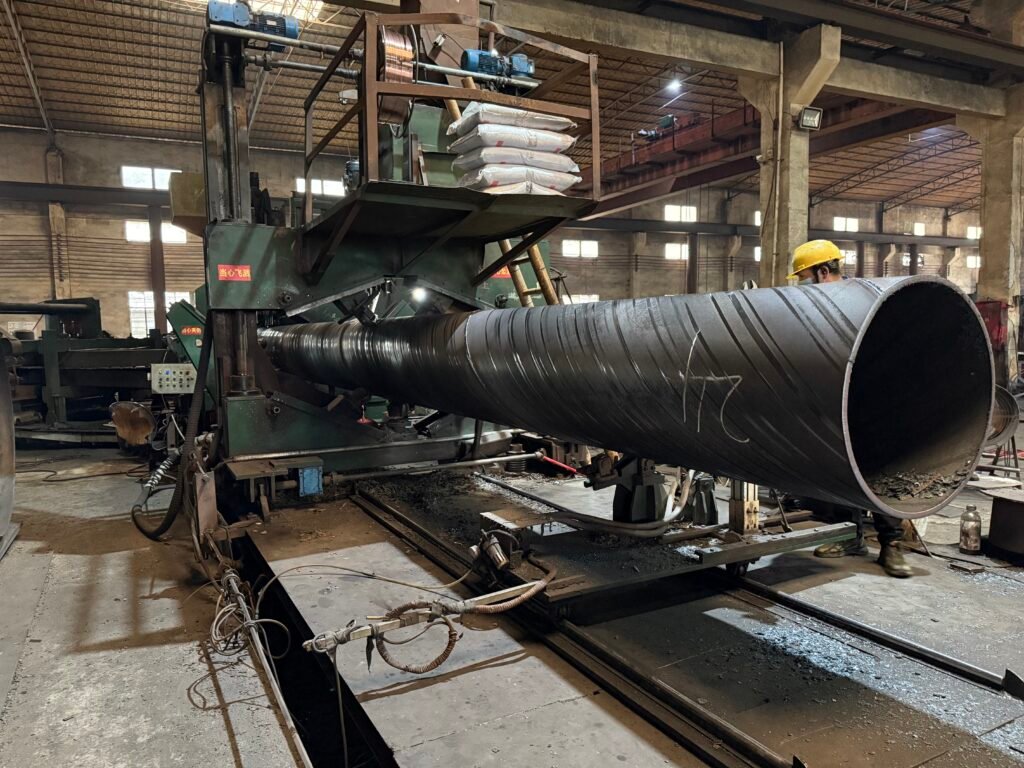
Plan handling and transport alongside the pipe order
Provide the finished dimensions and a confirmed mass basis to the transport planner. Check the proposed vehicle or container, usable load space, payload, lifting arrangement, supports, restraint and route restrictions. Pipe diameter, length and load distribution can rule out a transport option even when the total weight appears acceptable.
See the container-loading case page for further packing context. The IMO/ILO/UNECE CTU Code provides non-mandatory guidance on packing and securing cargo transport units. A generic guide does not validate a particular lifting or restraint plan.
What should a buyer receive before release?
- An agreed drawing and piece schedule identifying the offered pipe.
- The required material, inspection and coating documents for the order.
- Any required approval of deviations or connection details.
- Packing identification that matches the piece schedule.
- A confirmed handling and transport plan for dispatch and receipt.
For steel pipe and related fire-protection materials, send the specification, quantity and delivery requirements to info@canhopesteel.com. Availability and project suitability need to be confirmed for the exact proposed supply.