
Calculating steel pipe weight is an important part of purchasing, quotation preparation and transportation planning. Outside diameter, wall thickness, length and quantity all affect the result.
For a round carbon steel pipe, the calculation below estimates the mass of the steel wall. It is theoretical weight, not a certified shipment weight. Coatings, sockets, packing and dimensional tolerances must be handled separately.
Use our Pipe Weight Calculator for a preliminary estimate, then check the units and mass basis against the quotation.
In this guide
- 1. Information needed
- 2. Formula and units
- 3. Worked example
- 4. Theoretical versus actual weight
- 5. Order weight and container planning
- 6. Common questions
1. What information is needed?
| Input | What to use |
|---|---|
| Outside diameter, D | Actual outside diameter in millimetres, not the nominal DN or inch designation. |
| Wall thickness, t | Specified steel wall thickness in millimetres. Do not substitute a schedule number. |
| Length, L | Length of one piece in metres. Use the actual order length. |
| Quantity, n | Number of pieces of that same specification. |
A schedule or series is a specification label, not a thickness in millimetres. Look up its wall thickness for the exact size and standard before calculating. For a mixed order, create a separate calculation for each size, thickness and length.
2. Steel pipe weight formula
Theoretical mass per metre (kg/m) = 0.02466 × t × (D − t)
Use D and t in millimetres. The coefficient is rounded from π × 7,850 × 10⁻⁶, using an assumed steel density of 7,850 kg/m³. The area of the steel wall is π × [D² − (D − 2t)²] ÷ 4, which simplifies to π × t × (D − t).
The Mory carbon-steel pipe reference publishes the same coefficient with millimetre inputs. The Nippon Steel tubing catalogue documents the underlying 7.85 g/cm³ density assumption. These references explain the calculation, not the specification of a CanHope shipment.
This is a geometric estimate for a uniform round carbon steel tube with a positive bore. It is not a pressure-rating calculation, and the same coefficient should not be assumed for another material or density. A product standard or manufacturer may specify its own nominal mass and rounding rules.
- Weight per piece (kg) = kg/m × length in metres.
- Total theoretical steel weight (kg) = weight per piece × number of pieces.
- Metric tonnes = total kilograms ÷ 1,000.
3. Worked example: 48 mm × 2.0 mm pipe
This is an arithmetic example, not an offered stock specification: outside diameter 48 mm, steel wall thickness 2.0 mm, length 6 m and quantity 100 pieces.
| Calculation | Result |
|---|---|
| Per metre: 0.02466 × 2.0 × (48 − 2.0) | 2.26872 kg/m, approximately 2.269 kg/m |
| Per piece: 2.26872 × 6 | 13.61232 kg, approximately 13.61 kg |
| 100 pieces: 13.61232 × 100 | 1,361.232 kg, approximately 1,361.23 kg |
| Metric tonnes: 1,361.232 ÷ 1,000 | 1.361232 t, approximately 1.361 t |
Keep unrounded values during the calculation and round the final result. Do not replace 48 mm with a nearby nominal-size outside diameter: even a small input change changes the result.
4. Theoretical weight versus actual weight
The formula assumes consistent dimensions and density. Real pipe dimensions can vary within the limits of the applicable purchase specification. Those limits are not a universal percentage and should not be invented from a weight calculator.
- Wall thickness and outside diameter: confirm the permitted tolerances and measurement method in the ordered standard. A mass difference alone does not prove that an individual dimension is compliant or non-compliant.
- Length: nominal and measured piece lengths may differ within the agreed tolerance.
- Material: the coefficient uses an assumed density, not a measurement of the delivered material.
- Coating and processing: zinc, paint, sockets or other attachments can add mass; machining or drilling can remove it.
- Packing: straps, wrapping, pallets and other packaging belong in the appropriate shipping-weight calculation, not the bare pipe formula.
Does galvanizing increase pipe weight?
Yes. The zinc coating adds mass, but there is no single percentage suitable for every galvanized pipe. The addition depends on the actual coating requirement, coated area and measurement basis. Clarify whether a quoted coating mass is per coated surface or a combined two-sided value before making any conversion.
Ask whether the supplier’s unit weight is theoretical bare-steel mass, nominal coated-product mass or actual weighed mass. Agree the invoicing basis in the order. Do not quietly replace one basis with another because the numbers differ.
For the pipe itself, see our galvanized steel pipe information. Confirm the exact dimensions, finish and weight basis for the proposed order.
5. Total order weight and container planning
Calculate each specification separately, multiply by its quantity, then add the line totals. Keep pipe net weight, packed cargo gross weight and container tare as separate figures. For shipping, use the final packing and weighing records required by the carrier and applicable rules.
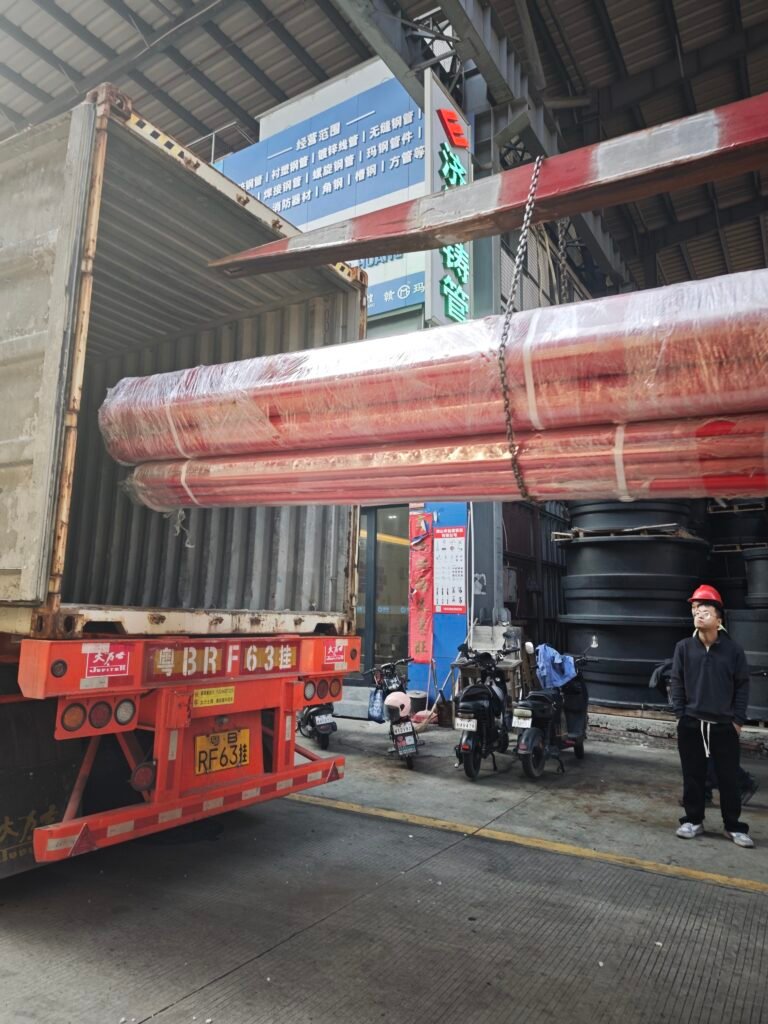
Container selection is not a weight-only calculation. Check pipe length, bundle dimensions, door opening, internal dimensions, load distribution, lifting access, permitted payload and route-specific road or port restrictions. A preliminary 40HQ estimate is not a loading guarantee.
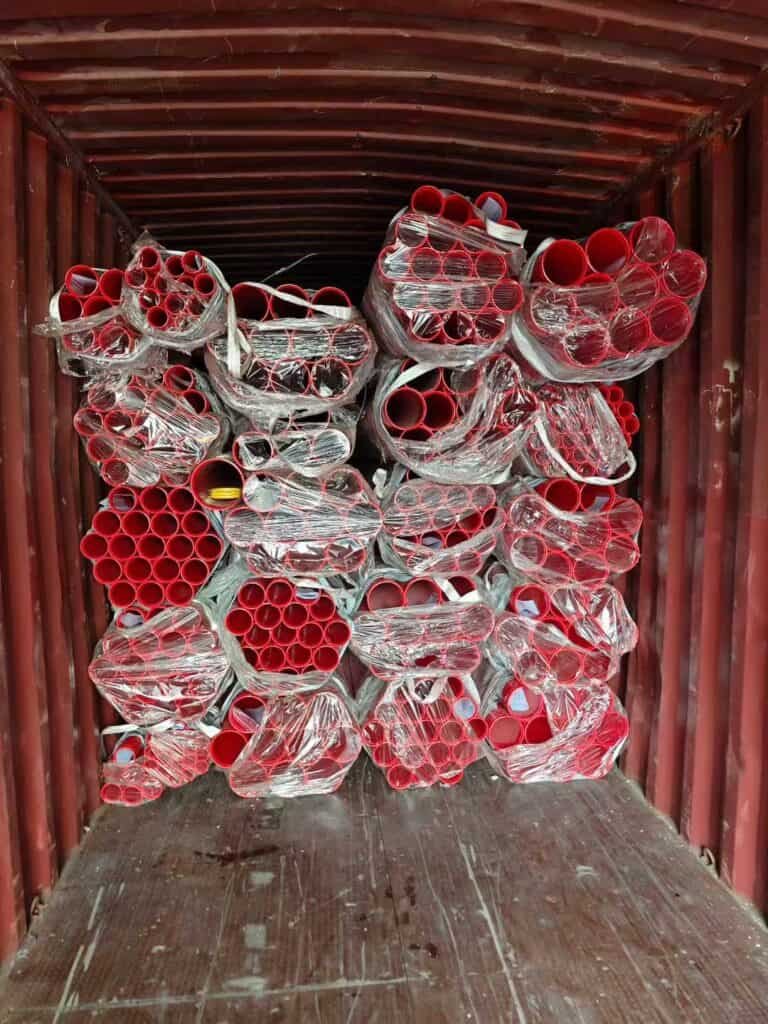
The container-loading case page gives visual context for packing. The actual shipment still needs a confirmed loading plan.
6. Common questions
How do I calculate the weight of a 6-metre pipe?
Calculate kg/m, then multiply by 6. In the example above, the theoretical bare-steel result is about 13.61 kg per piece.
Can I calculate pressure capacity from pipe weight?
No. Pipe weight does not establish material grade, allowable pressure, joint suitability or approval for a particular service. These require the project design and documented product specification.
What should I send for a quotation?
Send the pipe standard and grade, outside diameter, wall thickness, length, quantity, surface finish, end treatment and packing requirements. Ask for the quoted unit-weight basis and any required inspection documents. Enquiries: info@canhopesteel.com.