
Fire protection grooved pipe fittings are widely used in sprinkler systems, fire protection pipelines, pump rooms and building piping projects. Compared with welded connections, grooved pipe connections can help improve installation efficiency, reduce on-site welding work and make future maintenance easier.
However, selecting grooved fittings for a fire protection project is not only about choosing a product name. Buyers need to confirm fitting type, pipe size, connection method, surface finish, accessories, packaging and shipment requirements before placing an order.
This guide explains the key points to consider when selecting grooved pipe fittings for fire protection systems.
For project sourcing, you can also view our grooved pipe fittings for fire protection systems to check common product types and project supply support.
What Are Fire Protection Grooved Pipe Fittings?
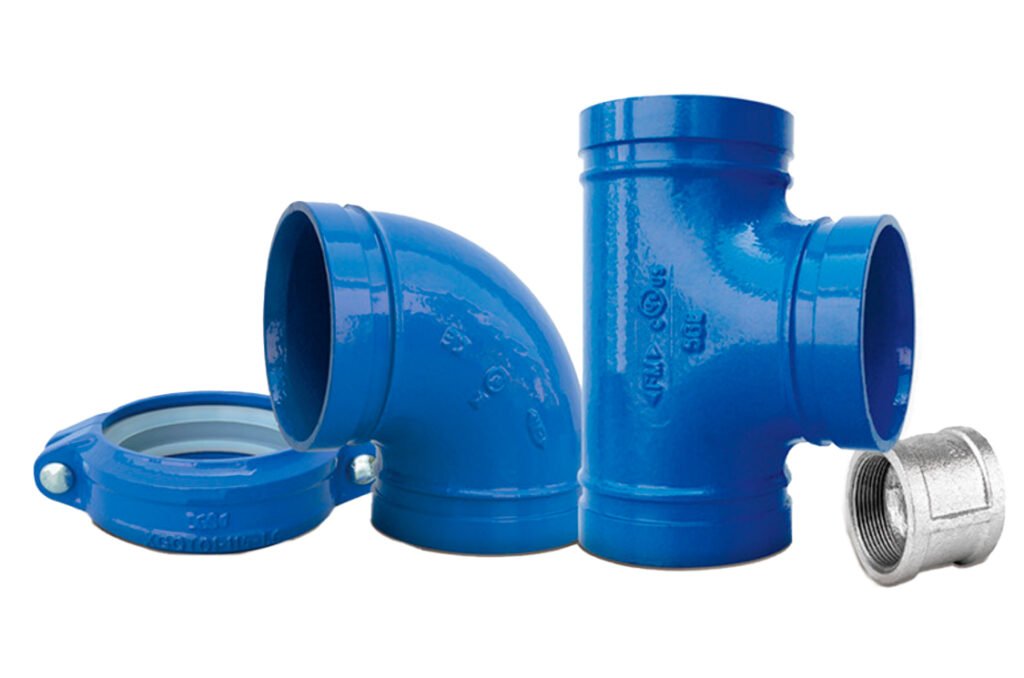
Fire protection grooved pipe fittings are mechanical pipe fittings used to connect, redirect, branch, reduce or terminate fire protection piping systems. They are usually installed together with grooved couplings, gaskets, bolts and nuts.
A typical grooved connection includes:
- Grooved pipe end
- Grooved fitting
- Rubber gasket
- Grooved coupling
- Bolts and nuts
In fire protection systems, grooved fittings are commonly used with fire sprinkler pipes, fire protection valves, flanges and other piping accessories.
The main purpose of using grooved pipe fittings is to provide a faster and more flexible pipe connection method compared with traditional welded connections.
If you need a basic explanation before selecting products for a project, you can also read our guide: What Are Grooved Pipe Fittings?.
Why Are Grooved Fittings Used in Fire Protection Systems?
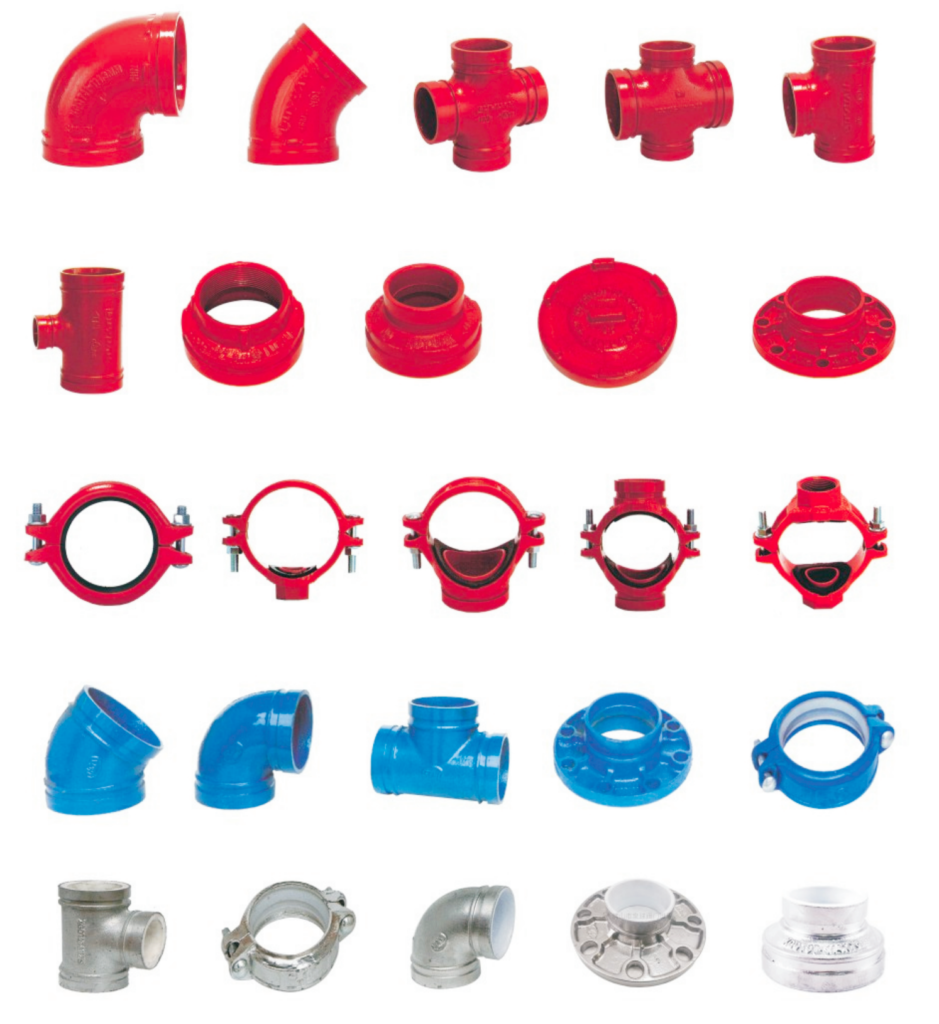
Fire protection projects often involve many pipe sections, fittings, valves and accessories. Installation speed, system reliability and maintenance convenience are important for contractors and project owners.
Grooved pipe fittings are commonly used in fire protection systems for several reasons.
Faster Installation
Grooved connections can reduce the need for on-site welding. Once the pipe ends are grooved and the correct fittings are prepared, workers can assemble the system using couplings, gaskets, bolts and nuts.
This can help improve installation efficiency, especially in commercial buildings, factories, warehouses and large sprinkler system projects.
Easier Maintenance
Grooved connections are mechanical connections. In many cases, parts of the piping system can be opened or replaced more conveniently than fully welded systems.
This is helpful for inspection, maintenance, repair and future system modification.
Flexible Project Installation
Fire protection piping layouts may need adjustment during project construction. Grooved fittings provide more flexibility when connecting pipes, valves, equipment and branch lines.
For contractors, this flexibility can reduce installation difficulty on site.
Reduced Welding Work
Welding requires skilled workers, equipment, safety control and more working time. Grooved fittings can reduce welding work in suitable fire protection applications.
This is one reason they are widely used in sprinkler pipelines and building fire protection systems.
Common Types of Fire Protection Grooved Pipe Fittings
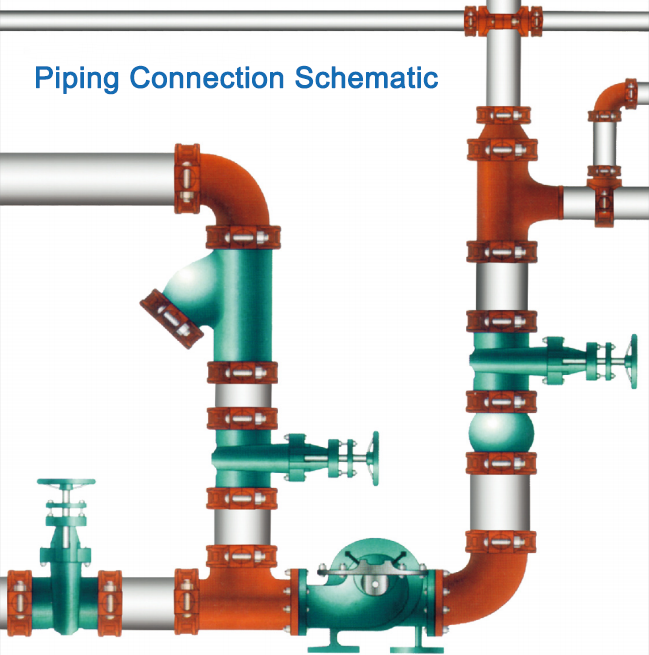
Different parts of a fire protection piping system require different fittings. Before purchasing, buyers should check the project drawing or material list carefully.
Grooved Couplings
Grooved couplings are used to connect two grooved pipe ends. They are essential components in a grooved piping system.
Common types include:
- Rigid grooved couplings
- Flexible grooved couplings
Rigid couplings are used when a fixed connection is required. Flexible couplings allow limited movement and may be used in systems where vibration or slight pipe movement needs to be considered.
Grooved Elbows
Grooved elbows are used to change the direction of a pipeline. Common options include 90-degree elbows, 45-degree elbows and other angle fittings.
They are widely used in sprinkler pipelines, pump rooms and fire protection pipe routes.
Grooved Tees
Grooved tees are used for branch connections. They allow one pipeline to connect with another pipe line.
Common types include:
- Equal tees
- Reducing tees
Equal tees are used when the branch pipe and main pipe have the same size. Reducing tees are used when the branch pipe is smaller than the main pipe.
Grooved Reducers
Grooved reducers are used to connect pipes of different sizes. They are commonly used when the pipeline needs to connect with different pipe diameters, valves or equipment.
Common types include:
- Concentric reducers
- Eccentric reducers
Mechanical Tees
Mechanical tees are often used to create branch outlets from the main pipe. They can simplify branch installation when they are suitable for the project design.
Mechanical tees are common in fire sprinkler systems and water supply pipelines.
Grooved Flanges
Grooved flanges or grooved flange adapters are used to connect grooved piping systems with flanged valves, pumps, meters or other equipment.
They are useful when a fire protection pipeline needs to connect with equipment that uses flange connections.
Grooved Caps
Grooved caps are used to close pipe ends. They can be used for pipe termination, testing points or temporary closure during installation.
Key Factors When Selecting Fire Protection Grooved Pipe Fittings
Selecting the right grooved pipe fittings requires more than checking the product name. The following factors should be confirmed before purchase.
1. Confirm the Fitting Type
The first step is to confirm which types of fittings are required.
A typical project may need:
- Grooved couplings
- Grooved elbows
- Grooved tees
- Grooved reducers
- Mechanical tees
- Grooved flanges
- Grooved caps
- Related accessories
For overseas procurement, it is better to prepare a clear fitting list with product type, size and quantity. This helps reduce mistakes and missing items during shipment.
2. Confirm the Pipe Size
Pipe size is one of the most important points when selecting grooved fittings.
The buyer should confirm:
- Nominal pipe size
- Outside diameter
- Fitting size
- Quantity for each size
- Matching pipe standard or project requirement
The available size range may vary depending on product type, supplier and project requirements. For this reason, it is better to send the project drawing or procurement list for confirmation before ordering.
Avoid selecting fittings only by general names such as “2 inch tee” or “4 inch coupling” without confirming the actual pipe size and connection requirement.
3. Check the Application Area
Fire protection piping systems may include different application areas, such as:
- Sprinkler pipeline
- Fire hydrant pipeline
- Pump room piping
- Main fire protection pipeline
- Branch pipeline
- Building mechanical room piping
Different parts of the system may require different fitting types and connection methods.
For example, pump rooms may require more flanged connections, while sprinkler branch lines may use more tees, elbows and mechanical tees.
4. Select the Correct Surface Finish
Surface finish should be selected according to the project environment and technical requirement.
Common surface finishes include:
- Red paint
- Galvanized surface
- Epoxy coating
Red painted grooved fittings are commonly used in fire protection systems. Galvanized or epoxy-coated options may be considered for specific environments or project requirements.
Before ordering, buyers should confirm whether the project has special requirements for corrosion protection, indoor or outdoor installation, or water system conditions.
5. Confirm Matching Accessories
Grooved fittings are not used alone. They usually need to be installed with matching accessories.
Common related accessories include:
- Grooved couplings
- Rubber gaskets
- Bolts and nuts
- Flanges
- Pipe supports
- Valves
- Threaded fittings
- Sprinkler accessories
If accessories are not matched correctly, installation may be delayed. For project procurement, buyers should check whether all necessary accessories are included in the order.
6. Consider Valves and Related Fire Protection Materials
Fire protection grooved fittings are often purchased together with other piping materials.
A complete fire protection piping project may require:
- Fire sprinkler pipes
- Galvanized steel pipes
- Grooved pipe fittings
- Threaded pipe fittings
- Fire protection valves
- Sprinklers
- Flanges
- Pipe supports
- Other accessories
For overseas project buyers, sourcing these materials together can reduce communication costs and make container shipment easier to arrange.
7. Check Packaging and Shipment Requirements
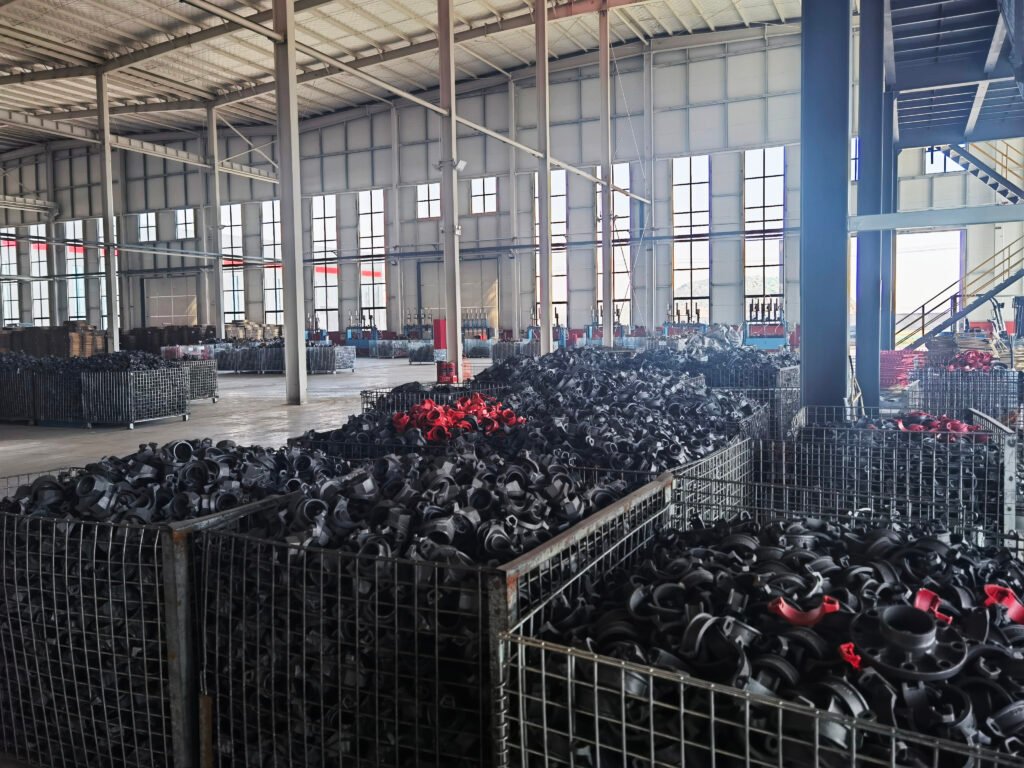
Packaging is important for export orders. Grooved pipe fittings may be packed in cartons, pallets or wooden cases depending on product type, weight and order quantity.
Before shipment, buyers should confirm:
- Packaging method
- Product labels
- Quantity per package
- Pallet or wooden case requirement
- Container loading plan
- Destination country or port
For mixed container orders, different products should be arranged properly to reduce damage during transportation.
8. Prepare a Clear Procurement List
A clear procurement list can make quotation and order confirmation much easier.
A good procurement list should include:
- Product name
- Size
- Quantity
- Surface finish
- Material requirement
- Application
- Packaging requirement
- Destination country or port
If project drawings are available, it is better to send them together with the procurement list. This helps the supplier check whether the product types and quantities are complete.
Common Mistakes When Buying Grooved Pipe Fittings
When purchasing fire protection grooved pipe fittings, some mistakes can lead to delays, mismatched products or extra costs.
Only Sending Product Names
Sending only product names without size and quantity is not enough. For example, “grooved elbow” can refer to different sizes, angles and surface finishes.
Ignoring Matching Accessories
Some buyers only order fittings but forget couplings, gaskets, bolts, nuts or other accessories. This can delay installation on site.
Not Confirming Surface Finish
Different projects may require different coatings. Buyers should confirm whether red paint, galvanized surface or epoxy coating is required.
Mixing Different Standards Without Confirmation
Pipe size, fitting dimensions and connection requirements should be checked carefully. If the pipe and fitting do not match properly, installation may be affected.
Not Planning Shipment Early
For overseas projects, shipment planning is important. Packaging, container loading and mixed product consolidation should be considered before the goods are ready.
How Can CanHopeSteel Support Fire Protection Project Procurement?
CanHopeSteel supports project-based procurement for fire protection and piping materials from China. In addition to grooved pipe fittings, we can also help source and supply related materials for the same project.
Products may include:
- Grooved pipe fittings
- Galvanized steel pipes
- Fire sprinkler pipes
- Threaded fittings
- Fire protection valves
- Sprinklers
- Flanges
- Pipe supports and accessories
For overseas contractors and project buyers, combined sourcing can help reduce communication work and make shipment arrangement easier.
If you are sourcing fittings for a fire protection project, you can visit our Grooved Pipe Fittings Supplier in China product page to check available product types and send your inquiry.
Conclusion
Selecting fire protection grooved pipe fittings requires careful checking of fitting type, size, application, surface finish, accessories, packaging and shipment requirements.
For contractors and overseas project buyers, a clear procurement list is the key to avoiding product mismatch and installation delay.
Grooved fittings are widely used in fire protection systems because they support faster installation, easier maintenance and more flexible piping system modification. When selected and matched correctly, they can help improve project installation efficiency and simplify future maintenance.
If you are preparing a fire protection piping project, send your fitting list, project drawing or procurement schedule to CanHopeSteel. Our team can help check product types and support related fire protection piping material supply from China.