GI Conduit Pipe vs PVC Conduit: Which Is Better for Electrical Wiring?

GI conduit pipe and PVC conduit are both widely used to route and protect electrical wires. However, they differ significantly in material strength, corrosion performance, installation method, grounding capability and overall project cost.

PVC conduit is generally lighter and more economical, while GI steel conduit provides stronger mechanical protection and is often selected for commercial, industrial and higher-protection electrical installations.

The right choice depends on the installation environment, project specification, mechanical protection requirement and local electrical code.

Quick Comparison: GI Conduit Pipe vs PVC Conduit

ComparisonGI Steel ConduitPVC Conduit
MaterialGalvanized steelPlastic
Mechanical ProtectionStrong resistance to impact and pressureSuitable for general cable protection
Corrosion PerformanceDepends on zinc coating and installation environmentDoes not rust
WeightHeavierLightweight
InstallationSet-screw, threaded or other metal fittingsCutting and adhesive connection
Grounding ContinuityMay provide electrical continuity when correctly installedNon-conductive
Electromagnetic ShieldingProvides a degree of shieldingNo metal shielding
Fire and Heat PerformanceSteel does not burn or soften like plasticPerformance depends on PVC formulation and temperature
CostUsually higherGenerally more economical
Common ApplicationsCommercial, industrial and high-protection projectsResidential and general concealed installations

Neither option is suitable for every project. The correct electrical conduit should be selected according to the actual installation requirements rather than price alone.

What Is GI Conduit Pipe?

GI conduit pipe is a galvanized steel tube used to protect and route electrical wires and cables.

The steel body provides mechanical protection, while the galvanized coating helps protect the surface against corrosion. GI conduit is commonly used in commercial buildings, industrial facilities, warehouses, factories, equipment rooms and MEP installation projects.

Depending on the market and project requirements, GI conduit systems may use threaded fittings, set-screw fittings or other connection methods.

CanHope’s standard metric galvanized steel conduit system uses threadless set-screw couplings and connectors. The conduit can be installed without pipe threading, helping reduce on-site processing and installation time.

Common available outside diameters include:

  • 16 mm
  • 20 mm
  • 25 mm
  • 32 mm
  • 40 mm
  • 50 mm

Different wall thicknesses and zinc coating options can also be supplied according to project requirements.

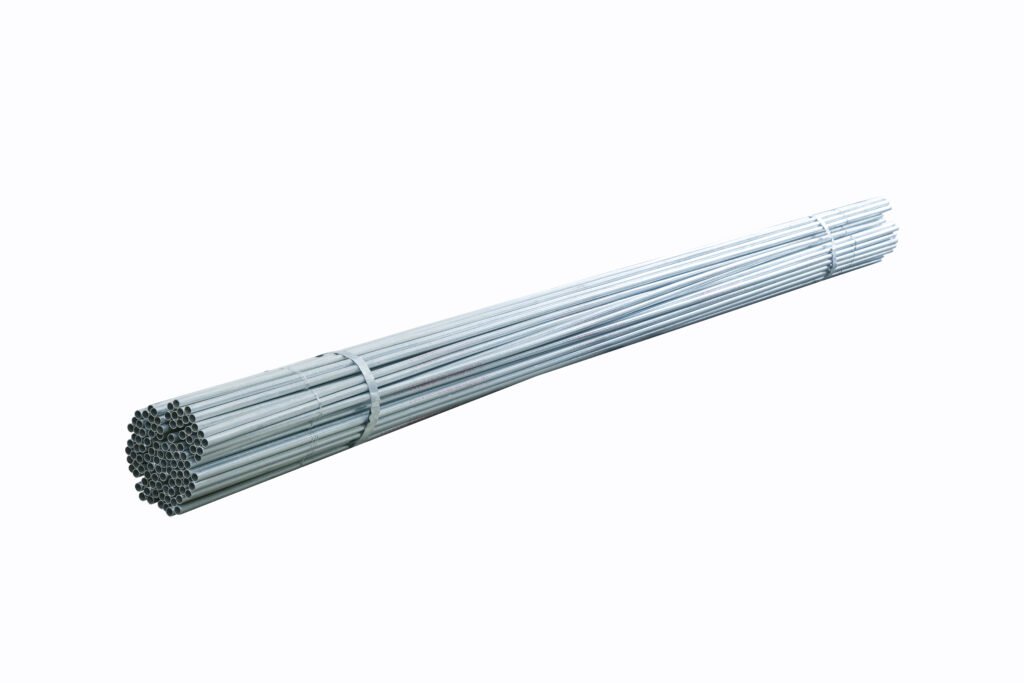
Galvanized steel electrical conduit pipes for wiring protection
Galvanized steel conduit pipes available in different sizes, wall thicknesses and zinc coating options.

What Is PVC Conduit?

PVC conduit is a plastic pipe designed for electrical wiring protection.

It is lightweight, does not rust and is usually easier to cut and transport than steel conduit. PVC conduit sections are commonly connected using fittings and suitable adhesive products.

PVC conduit is widely used in residential buildings, concealed installations, underground systems and projects where corrosion resistance and lower material cost are important.

However, the mechanical strength, temperature resistance and installation requirements of PVC conduit vary according to the product grade and applicable standard.

1. Mechanical Protection

Mechanical protection is one of the main differences between GI conduit pipe and PVC conduit.

GI Steel Conduit

The steel body provides stronger protection against:

  • Impact
  • Compression
  • Construction damage
  • Accidental drilling
  • Equipment contact
  • Heavy site conditions

This is especially important before concrete is poured or walls are completed. During construction, conduit may be stepped on, compressed by reinforcement, hit by tools or moved during other installation work.

A damaged conduit may make cable pulling difficult after the concrete or wall has already been completed. Steel conduit helps reduce this risk.

PVC Conduit

PVC conduit is suitable for many general wiring applications, but it can be more vulnerable to crushing, impact and deformation, especially when a light-duty product is used.

For ordinary residential or low-risk concealed wiring, PVC conduit may provide sufficient protection. For industrial or higher-protection projects, metal conduit may be specified.

2. Corrosion Resistance

PVC does not rust, while the corrosion performance of GI conduit depends on its zinc coating and installation environment.

PVC Conduit

PVC conduit is naturally resistant to rust and many moisture-related conditions. This makes it a practical choice for underground, wet or corrosive environments when the selected PVC product is suitable for the application.

GI Conduit Pipe

Galvanized steel conduit is protected by a zinc coating. A higher zinc coating generally provides better surface protection than a lower zinc coating.

For dry indoor and concealed installations, economical galvanized material may be acceptable when permitted by the project specification.

For exposed, humid or higher-corrosion environments, a higher zinc coating such as Z275 may be considered.

Special attention should also be given to:

  • Cut edges
  • Welded seams
  • Connection points
  • Damaged galvanized surfaces
  • Areas where conduit enters or leaves concrete
  • Locations exposed to moisture or chemicals

The zinc coating should therefore be selected according to the actual project environment rather than assuming that all galvanized conduit provides the same corrosion performance.

3. Concealed Installation

Both PVC and GI conduit can be used for concealed electrical wiring, subject to the project design and local requirements.

When PVC May Be Suitable

PVC conduit is often selected for concealed installation because it is:

  • Economical
  • Lightweight
  • Easy to cut
  • Resistant to rust
  • Convenient for residential projects
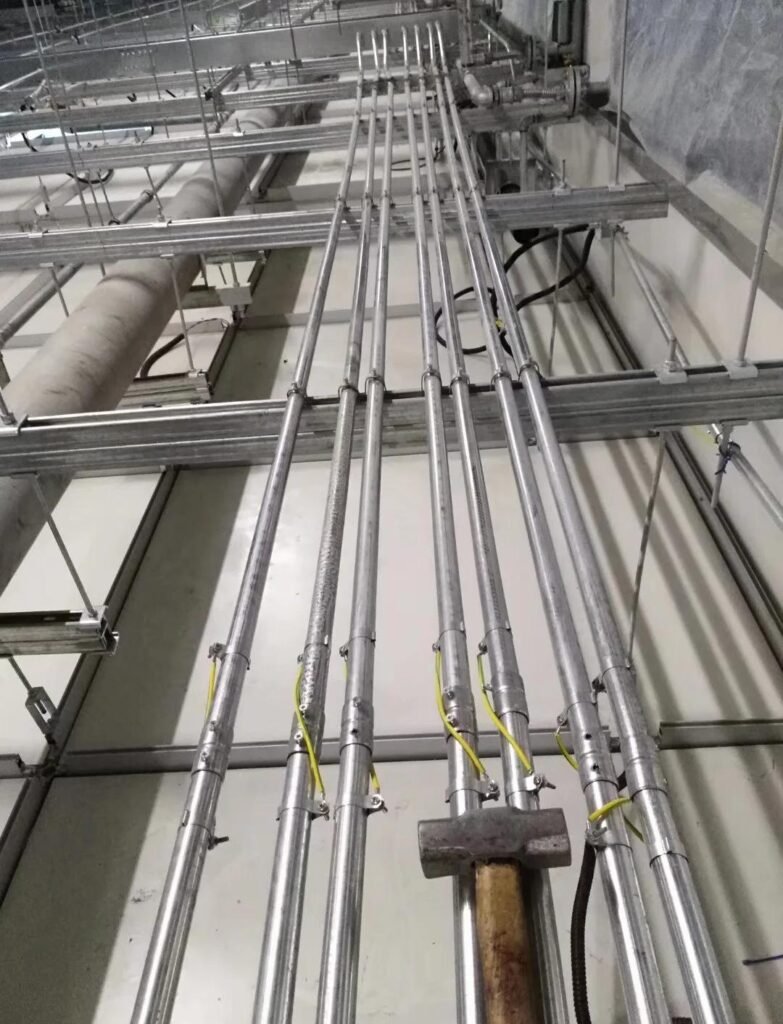
Galvanized steel conduit installation for commercial electrical wiring system using GI conduit pipes and conduit fittings
Galvanized steel conduit installation on site for commercial electrical wiring and cable management systems.

Why Some Projects Still Specify GI Conduit

Even when the conduit will be embedded in a wall or concrete, GI steel conduit may still be selected because it provides better mechanical protection during construction.

Metal conduit can better resist damage from:

  • Workers stepping on the conduit
  • Reinforcement movement
  • Concrete vibration
  • Heavy materials placed on the conduit
  • Later drilling or fixing work

Therefore, the decision is not only based on the condition after the conduit is embedded. Protection during construction and future building work is also important.

4. Exposed Installation

For exposed electrical wiring, appearance, mechanical protection, fixing method and environmental conditions become more important.

GI steel conduit is commonly selected for exposed installation in:

  • Factories
  • Warehouses
  • Workshops
  • Equipment rooms
  • Commercial buildings
  • Utility areas
  • Industrial electrical systems

Steel conduit provides a rigid and organized wiring route and can be secured using conduit saddles, spacer saddles and other metal supports.

PVC conduit can also be used for exposed installations when permitted, but the project should consider impact risk, temperature, ultraviolet exposure and appearance requirements.

For exposed GI conduit, the required zinc coating should be selected according to the humidity and corrosion conditions of the installation area.

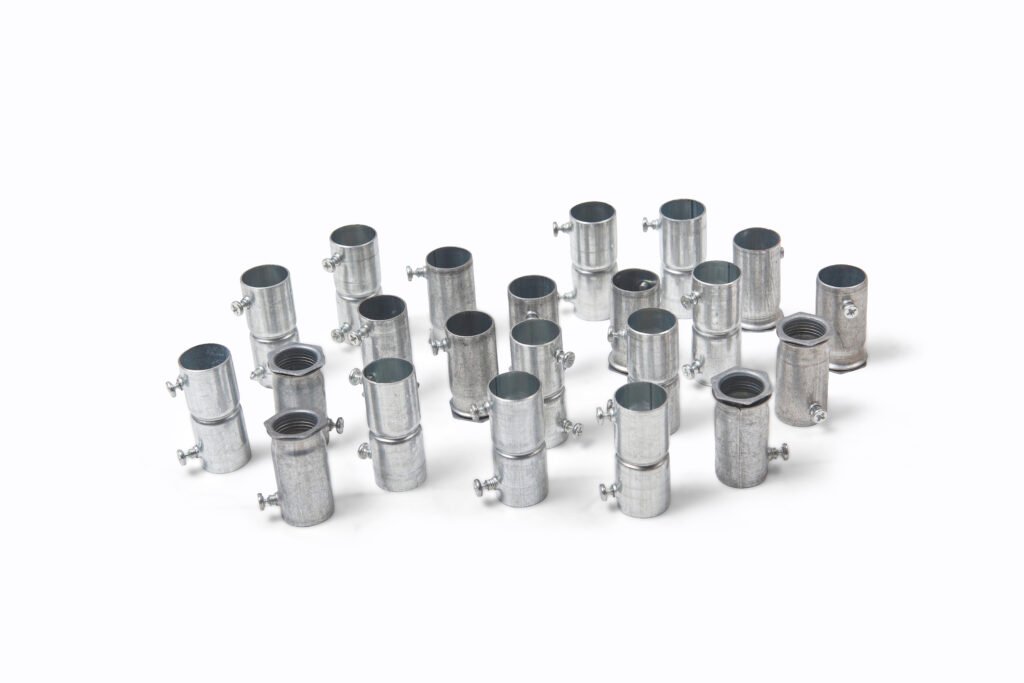
Galvanized steel set screw conduit couplings and connectors
Threadless set screw fittings for connecting galvanized steel electrical conduit pipes.

5. Installation Method

PVC conduit is usually easier to cut and handle because it is lighter.

GI conduit is heavier, but different conduit fitting systems can improve installation efficiency.

PVC Conduit Installation

PVC conduit commonly uses:

  • Plastic couplings
  • Elbows
  • Junction boxes
  • Adhesive connections
  • Plastic or metal supports

Threadless GI Conduit Installation

A threadless steel conduit system uses set-screw couplings and connectors.

The installer inserts the conduit into the fitting and tightens the screw to secure the connection. This avoids pipe threading and reduces the need for threading equipment on site.

A complete GI conduit system may include:

  • Set-screw couplings
  • Conduit connectors
  • Conduit bushes
  • Galvanized junction boxes
  • Conduit saddles
  • Spacer saddles
  • Manual conduit benders

Although steel conduit is heavier than PVC, a threadless fitting system can simplify installation compared with traditional threaded steel conduit.

6. Grounding and Electrical Continuity

PVC is a non-conductive material and cannot provide an electrical grounding path.

GI steel conduit is conductive. When the conduit, fittings and boxes are correctly installed, the metal system may provide electrical continuity for grounding and bonding.

However, this does not mean that an additional grounding conductor is never required.

Grounding requirements depend on:

  • Local electrical regulations
  • Project drawings
  • Fitting design
  • Connection quality
  • System continuity
  • Consultant or engineer requirements

The final grounding arrangement must follow the applicable electrical code and project specification.

7. Electromagnetic Shielding

Metal conduit can provide a degree of electromagnetic shielding around electrical cables.

This may be useful near:

  • Motors
  • Variable-frequency drives
  • Control equipment
  • Industrial machinery
  • Communication systems
  • Sensitive electrical devices

PVC conduit does not provide metal shielding.

Whether shielding is necessary depends on the cable type, electrical system and project design. Not every installation requires metal conduit for this reason, but it can be an important factor in industrial projects.

8. Fire and Heat Considerations

Steel is non-combustible and does not soften in the same way as plastic when exposed to heat.

PVC conduit performance depends on the PVC formulation, product rating and installation temperature. Under high heat, unsuitable plastic conduit may soften or deform.

However, using steel conduit does not automatically make the entire cable installation fire resistant.

The fire performance of a complete electrical system depends on:

  • Cable type
  • Junction boxes
  • Fittings
  • Supports
  • Fixing methods
  • Penetration seals
  • Complete system certification

For fire alarm, emergency power or other life-safety circuits, the full system specification should be followed.

9. Cost Comparison

PVC conduit is normally less expensive in material cost and is easier to transport and handle.

GI steel conduit costs more because of:

  • Steel raw material
  • Galvanized coating
  • Higher product weight
  • Metal fittings
  • Additional handling requirements

However, the lowest purchase price does not always mean the lowest project cost.

A project should also consider:

  • Risk of damage during construction
  • Replacement and repair cost
  • Cable pulling problems
  • Mechanical protection requirements
  • Service life
  • Consultant specifications
  • Installation labor

For ordinary residential concealed wiring, PVC may be the more economical solution.

For commercial, industrial or higher-protection applications, the additional cost of GI conduit may be justified by stronger protection and project compliance.

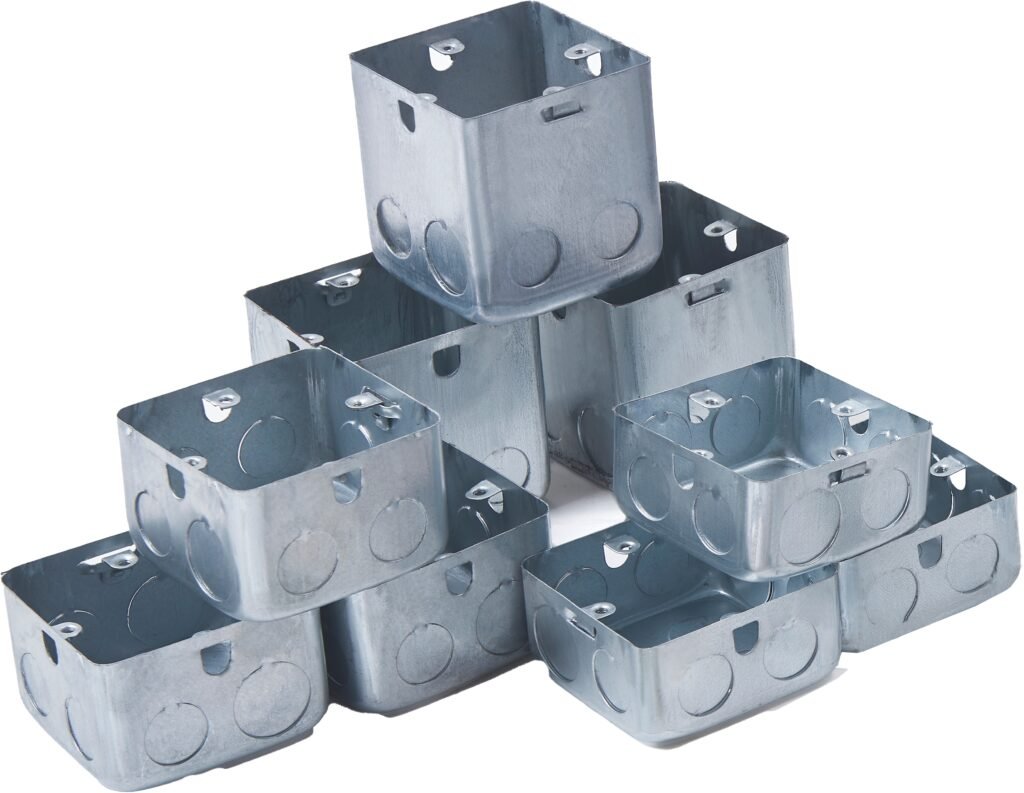
Galvanized steel electrical junction boxes with conduit knockouts
Metal junction boxes for electrical conduit connections and cable branching.

Which Conduit Should You Choose?

Choose PVC Conduit When:

  • The project prioritizes lower material cost
  • The installation is residential or light duty
  • Rust resistance is important
  • High mechanical protection is not required
  • The project specification permits PVC
  • The conduit will be installed in a suitable underground or concealed location

Choose GI Steel Conduit When:

  • Strong mechanical protection is required
  • The project is commercial or industrial
  • Exposed metal conduit is specified
  • Construction damage is a concern
  • Electrical continuity or shielding is required
  • The project drawing specifies metal conduit
  • A complete conduit and metal fitting system is needed

The final decision should always follow the project drawings, consultant requirements and local electrical regulations.

Selecting Wall Thickness and Zinc Coating

When purchasing GI conduit pipe, buyers should not only confirm the diameter.

The following information should also be specified:

  • Outside diameter
  • Wall thickness
  • Pipe length
  • Zinc coating
  • Connection method
  • Required fittings
  • Installation environment
  • Applicable standard
  • Required quantity

CanHope supplies metric galvanized steel electrical conduit pipes in different sizes, wall thicknesses and zinc coating options.

Economical galvanized conduit may be considered for suitable dry concealed installations, while Z275 galvanized material is available for exposed or higher-corrosion requirements.

Threadless set-screw couplings, junction boxes, conduit saddles, spacer saddles and bending tools can also be supplied together.

Conclusion

PVC conduit is lightweight, economical and resistant to rust, making it suitable for many residential and general concealed installations.

GI steel conduit provides stronger mechanical protection, electrical continuity and a more rigid wiring system. It is commonly selected for commercial, industrial, exposed and higher-protection applications.

There is no single conduit material that is best for every project.

The correct choice depends on the installation environment, required protection level, project budget, local electrical regulations and technical specifications.

For available sizes, wall thicknesses, zinc coating options and matching fittings, view our galvanized steel electrical conduit pipe and fittings range.

Frequently Asked Questions

Is GI conduit better than PVC conduit?

GI conduit provides stronger mechanical protection, while PVC conduit is lighter, more economical and does not rust. The better choice depends on the installation environment and project specification.

Can GI conduit pipe be embedded in concrete?

GI conduit can be used in concealed or concrete-embedded installations when permitted by the project specification and local requirements. The appropriate wall thickness and zinc coating should be selected according to the environment.

Does PVC conduit provide grounding?

No. PVC is non-conductive and cannot provide an electrical grounding path. A separate grounding conductor may be required according to the electrical design.

Does GI conduit require threading?

Not always. Some steel conduit systems use threaded connections, while threadless systems use set-screw couplings and connectors. CanHope’s standard metric conduit system uses threadless set-screw fittings.

Is Z275 required for all GI conduit installations?

No. The required zinc coating depends on the installation environment and project specification. Z275 is generally considered when higher surface corrosion protection is required.

Can GI conduit fittings be supplied with the pipes?

Yes. Set-screw couplings, connectors, bushes, galvanized junction boxes, conduit saddles, spacer saddles and bending tools can be supplied together.