
The important distinction is when the zinc coating is applied. Pipe galvanized after fabrication is coated after the tube has been made. Pre-galvanized pipe is made from strip or sheet that was zinc-coated before it was formed and welded into a tube.
Both routes can involve hot-dip galvanizing. “Hot dip” versus “pre-galvanized” is useful purchasing shorthand, but it is not a complete coating specification or a reliable way to predict service life.
For product enquiries, see our galvanized steel pipe range. Confirm the actual process, coating and dimensions in the quotation.
In this guide
- 1. How the processes differ
- 2. Compare the offered products
- 3. Read coating specifications correctly
- 4. Match the application
- 5. Buyer checklist and questions
1. How the galvanizing processes differ
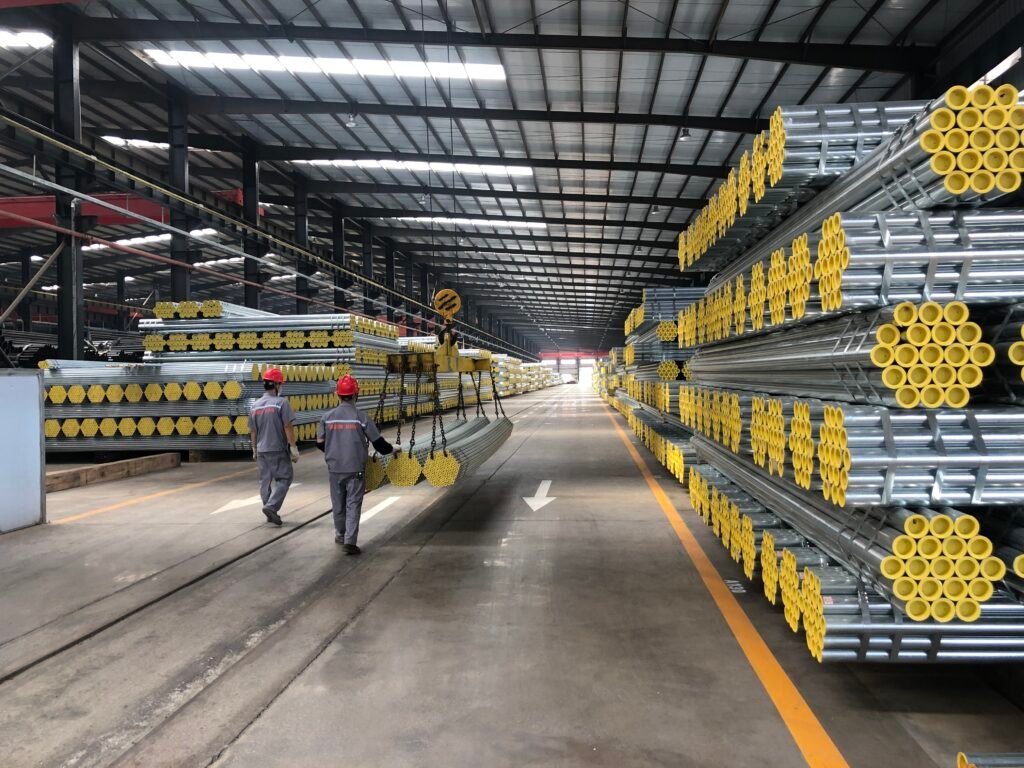
Galvanizing after pipe fabrication
In an after-fabrication process, the completed article is cleaned and immersed in molten zinc under the applicable process specification. The process can coat accessible internal and external surfaces, but actual coverage, coating thickness, finish and repair requirements must be verified for the product.
Pre-galvanized pipe
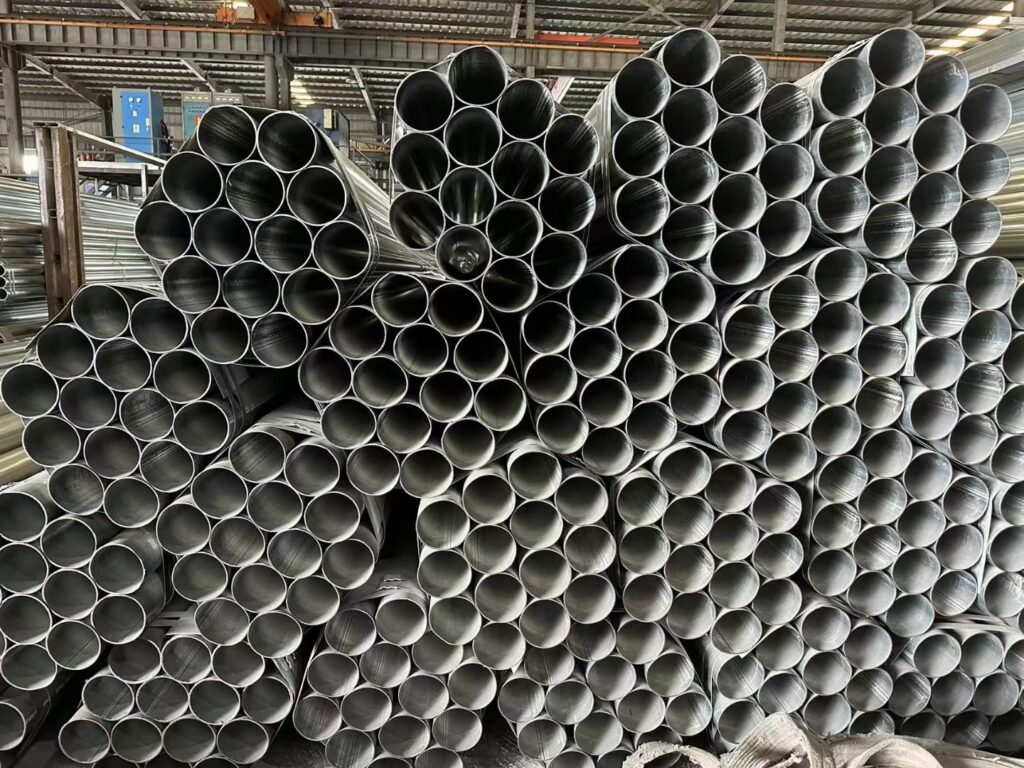
Pre-galvanized tube is formed from previously coated strip or sheet. Forming, welding and cutting occur after the original coating has been applied, so buyers should ask how the weld seam and cut edges are protected and what coating remains on the finished tube.
The American Galvanizers Association’s continuous-versus-batch comparison explains the difference between coating sheet before fabrication and coating a fabricated article. Its discussion describes the processes; it is not certification of a specific CanHope product.
2. Compare the offered products, not just their names
| Check | Galvanized after fabrication | Pre-galvanized tube |
|---|---|---|
| Order of operations | Tube/article is fabricated before the coating process. | Coated strip/sheet is subsequently formed, welded and cut. |
| Areas needing attention | Internal coverage, drainage, finish, subsequent processing and any permitted repairs. | Coating at weld seams, cut ends, formed areas and any repairs. |
| Coating evidence | Applicable finished-product coating requirement and inspection results. | Strip/sheet coating designation plus the finished-tube requirements and results. |
| Dimensions | Confirm actual OD/section, steel wall thickness and tolerances. | Confirm actual OD/section, steel wall thickness and tolerances. |
| Durability | Assess the actual coating and exposure; do not assign a universal lifetime. | Assess the actual coating and exposure; do not infer performance from price. |
| Cost | Compare the full specified product and processing, not a generic premium. | Compare like-for-like dimensions, coating, ends and acceptance requirements. |
3. Read coating mass and thickness correctly
A coating mass in g/m² and a coating thickness in micrometres describe different quantities. A sheet designation may refer to combined mass on two sides; a finished-article requirement may use a different basis. Do not compare the numbers without checking how they are defined and measured.
- Identify the governing coating standard and the coated product it covers.
- Clarify whether the stated mass is per surface or combined across two sides.
- Ask whether the value is a minimum, average, nominal designation or measured result.
- State internal/external requirements and treatment of seams, cut edges and damaged areas.
- Agree the sampling, test method and acceptance criteria required by the order.
The AGA batch-galvanizing overview explains that coating requirements vary with product category and steel thickness. Therefore, neither one zinc-mass range nor one wall-thickness range should be presented as universal for all hot-dip galvanized pipe.
4. Which process is better for the application?
There is no universal answer. Compare the actual exposure, intended function and complete product specification. An indoor frame, a buried line and pressure piping have different requirements; a coating process does not establish the mechanical or pressure suitability of the steel tube.
For corrosion planning, coating thickness matters alongside moisture, salts, pollutants, drainage and the local environment. AGA’s discussion of coating thickness and service life explains this dependence. A fixed “20–50 year” life or a blanket claim of suitability for coastal conditions should not be assumed without an application-specific basis.
For fire protection, water service or structural work, confirm the required pipe standard, grade, dimensions, connection method and applicable approvals separately. A galvanized finish is not proof of acceptance for those uses. Pre-galvanized structural tube should not be substituted for a specified pressure pipe simply because both carry a zinc coating.
5. Buyer checklist and common questions
- State the intended application and installation environment.
- Provide the pipe/tube standard, grade, actual section dimensions, wall thickness, length and quantity.
- Specify coating process, coating requirement and measurement basis.
- Identify required ends, seam/edge treatment and any additional fabrication.
- Agree test/inspection documents, packaging and delivery terms before ordering.
Does pre-galvanized always mean a light coating?
No universal coating mass follows from that name. Check the specified strip coating and the finished-tube condition instead of assuming a particular Z designation.
Can pre-galvanized pipe be used outdoors?
That depends on the actual coating, finished edges/seams, exposure and project requirements. Ask for evidence for the proposed product and environment rather than a yes/no answer based on the process name.
Can I specify a different coating?
Include the required process and coating performance in the enquiry. Availability and compliance must be confirmed for the exact product and order. Send your specification to info@canhopesteel.com.