
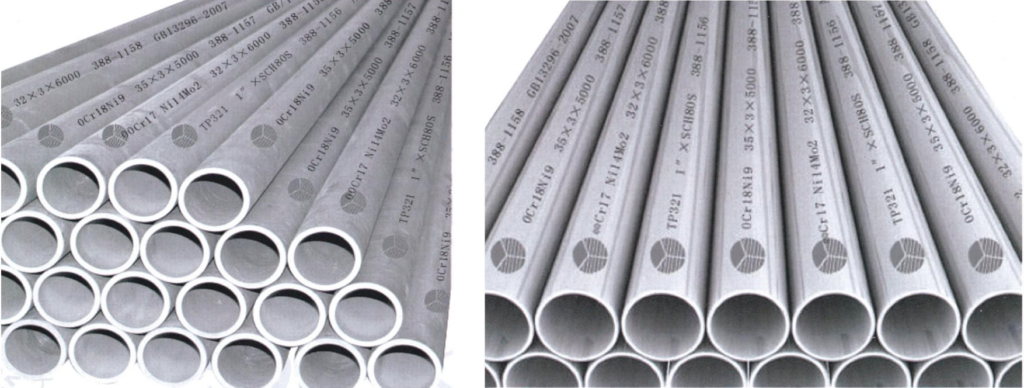
“Fire protection pipe” and “normal steel pipe” are commercial descriptions, not enough information to decide whether a pipe is suitable for a fire system. The important comparison is between the documented product and the approved project requirements.
An unsuitable substitution can create safety and installation problems. However, general-service steel pipe is not automatically unsafe, and a pipe sold as “fire pipe” is not automatically acceptable. Check the specific standard, scope, dimensions, joints and required approval evidence.
In this guide
- 1. Purpose and application
- 2. Material and coating
- 3. Standards and product approval
- 4. Safety and performance
- 5. Cost versus value
- 6. How to choose
- 7. Frequently asked questions
1. Purpose and application
A fire-protection installation has a defined service and design basis. The responsible designer and approving authority determine which pipe specifications and joining arrangements are acceptable. Pipe selected for another application may or may not satisfy those requirements.
For context, ASTM A795/A795M explicitly addresses steel pipe for fire protection, while ASTM A53/A53M covers several general mechanical and pressure applications. These scopes do not make the standards interchangeable, and citing either standard is not a project approval.
2. Material and coating differences
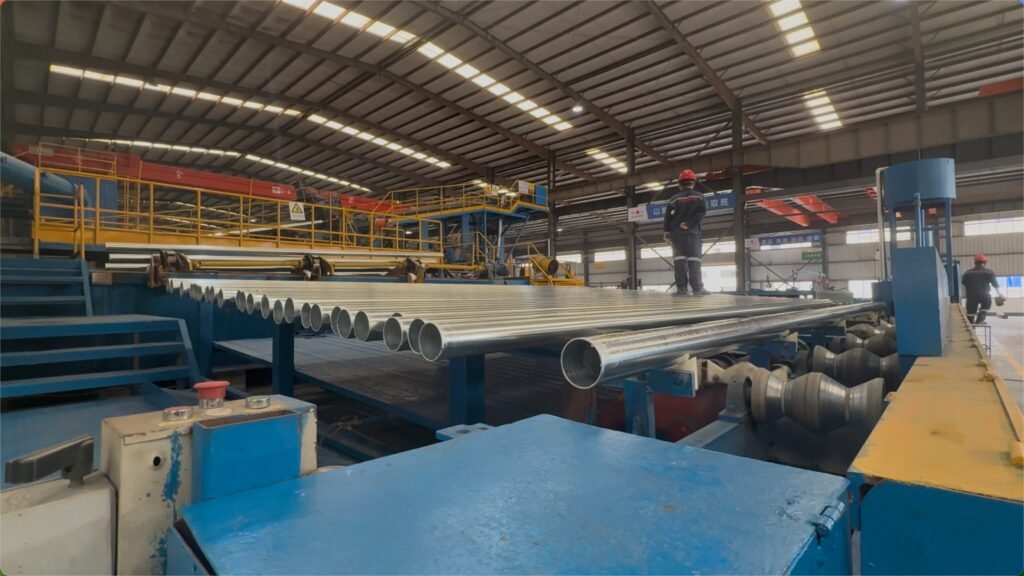
Black, galvanized and painted steel pipe can appear in product catalogues. Specify the material and finish separately. The required corrosion protection depends on the service, installation environment and project specification.
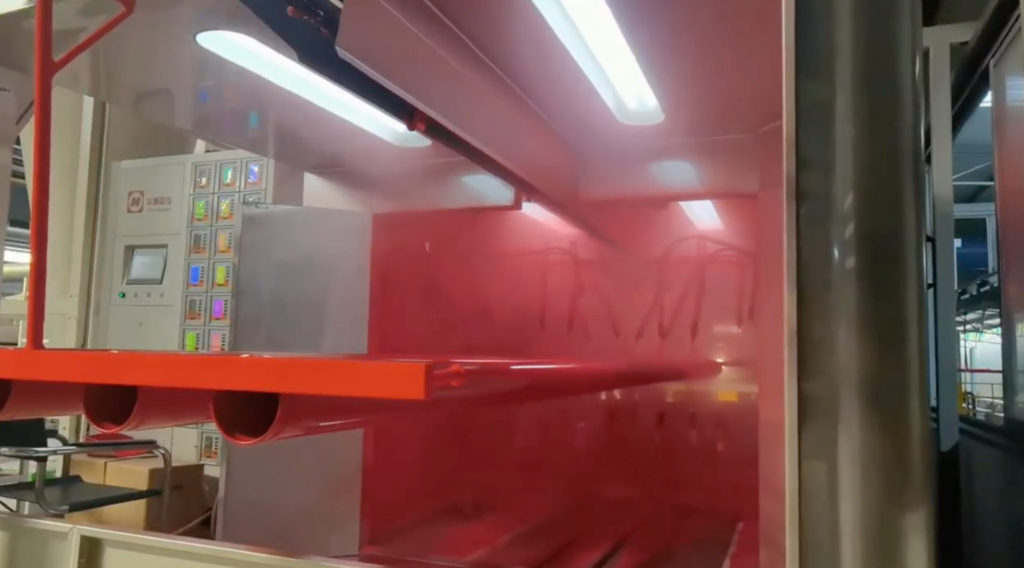
A galvanized finish is not a fire-system certification, and red paint does not establish pressure capacity. Equally, the absence of a red finish does not prove a pipe is unsuitable. The American Galvanizers Association’s process description explains galvanizing as a zinc-coating process, not an approval category.
3. Standards and product approval
Keep these three checks separate rather than listing “UL/FM, ASTM, EN and GB” as though they were equivalent material standards:
| Check | What it establishes or requires |
|---|---|
| Product/material standard | A specific numbered standard and edition define the relevant product requirements. ASTM, EN or GB alone is not a complete specification. |
| Listing or approval | Where required, verify current evidence covering the actual manufacturer, product/model, sizes and service limitations. |
| System acceptance | The installed combination must meet the design, applicable local requirements and approval process. A component document is not approval of the whole installation. |
UL Solutions’ sprinkler pipe and fittings service describes product/assembly testing and certification. The FM Approval Guide provides current information on FM Approved products. These are separate from specifying a steel grade or dimensional standard.
Some fittings may be offered with UL Listing and/or FM Approval, depending on the exact manufacturer, model and size. Check the offered item’s evidence. Do not extend one fitting’s approval to every pipe, valve or other item in the order, or use another manufacturer’s rating as evidence for CanHope supply.
4. Safety and performance
Performance depends on the complete specified assembly: pipe material and dimensions, end preparation, joints, fittings, gaskets, supports and service conditions. A thicker wall, familiar colour or higher catalogue pressure figure does not replace compatibility and design review.
Check whether the intended joint preparation is permitted for the selected pipe and whether the matching component documentation covers it. Reject undocumented substitutions for review rather than assuming that a similar-looking pipe will perform the same way.
5. Cost versus value
Compare quotations against the same specification and scope. Differences in wall thickness, finish, end preparation, inspection documents, packing or included components can change the price. There is no universal rule that a “fire pipe” label must cost more or guarantees compliance.
A useful comparison includes the delivered material, compatible fittings and the evidence needed for acceptance. Confirm any proposed alternative with the responsible project reviewer before ordering.
6. How to choose the right pipe
- Confirm the project’s applicable requirements and approved material schedule.
- Identify the exact pipe standard, edition, grade, size, actual OD and wall thickness.
- Specify finish, lengths and end preparation.
- Check joints and mating components against their manufacturer’s documentation.
- Request required listing/approval evidence for the exact offered products.
- Agree traceability, inspection records and acceptance responsibilities before shipment.
For supply categories, see our fire-protection materials overview. Send the BOQ, drawings and required documentation to info@canhopesteel.com so that the proposed items can be checked against the enquiry.
7. Frequently asked questions
Can general-service steel pipe be used in a fire system?
Potentially, but only if the specific product and assembly meet the applicable project requirements. Do not approve or reject it by the phrase “normal pipe” alone.
Is galvanized or red-painted pipe always the best choice?
No. The correct finish follows the actual service and specification. Colour and coating are not substitutes for product acceptance.
Does a UL or FM logo cover an entire order?
No. Verify the exact products and limitations covered by the relevant listing or approval, and review other order items separately.