
Fire protection steel pipes are used in sprinkler and other fire-fighting systems. Their manufacture depends on the specified pipe standard, production route and finish. There is no single sequence that applies to every fire-protection pipe.
The following is an illustrative overview of a welded, hot-dip galvanized route. Seamless pipe, black pipe and other specified finishes follow different routes or omit particular stages. The photographs illustrate the subject; they do not certify a factory, a production lot or a completed inspection.
In this guide
- 1. Steel coil preparation
- 2. Pipe forming and welding
- 3. Hot-dip galvanizing, when specified
- 4. Testing and inspection
- 5. Packing and shipment
- 6. Frequently asked questions
1. Steel coil preparation
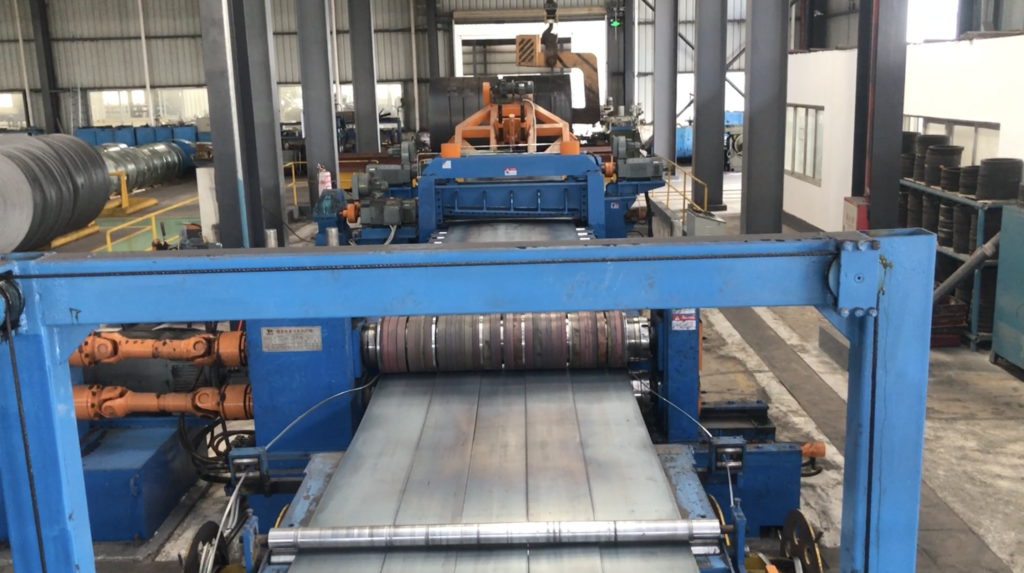
For a strip-based welded route, steel coil is prepared and fed into the production line. The required steel grade, dimensions and material identification should be established before production. A photograph of a coil line does not establish those properties.
2. Pipe forming and welding
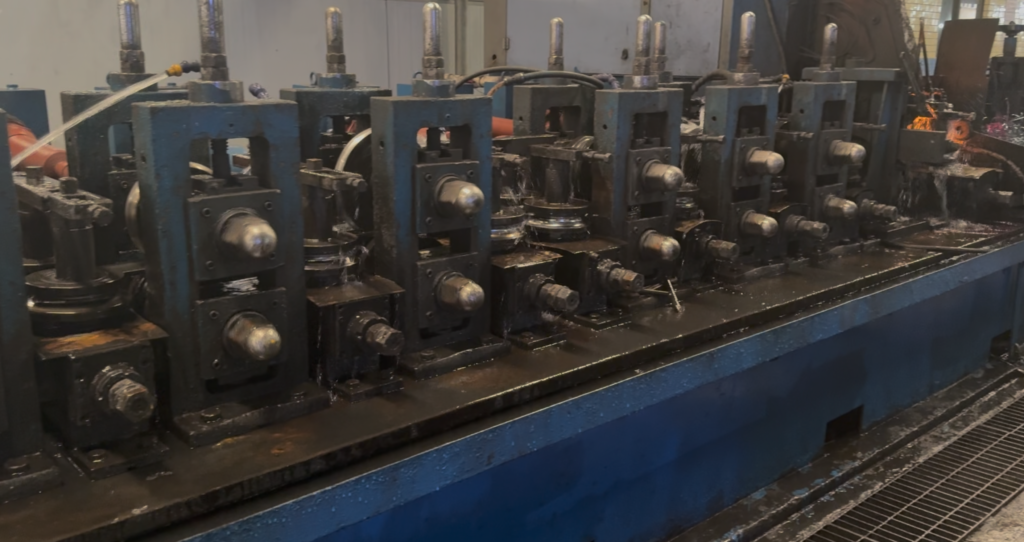
In a welded route, the strip is formed into a tube and its edges are joined by the specified welding process. High-frequency electric-resistance welding is one possible route, not a defining feature of every fire-protection steel pipe. Seamless pipe does not have this longitudinal welded seam.
For example, ASTM A53/A53M covers several welded and seamless pipe types. ASTM A795/A795M addresses welded and seamless steel pipe for fire-protection use. Select the standard and permitted type required by the project rather than inferring them from illustrative process imagery.
3. Hot-dip galvanizing, when specified
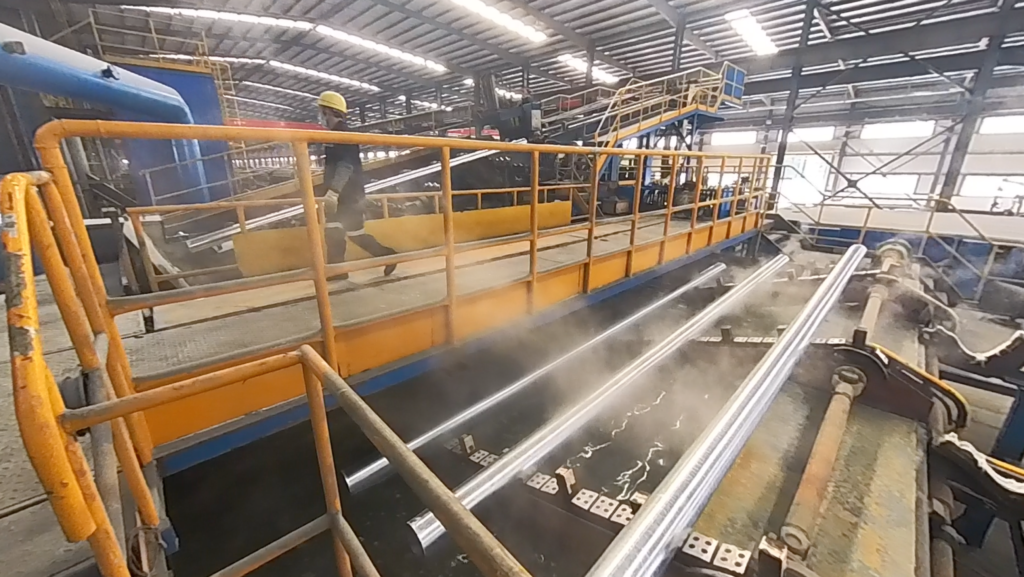
For an after-fabrication hot-dip galvanized product, the steel is cleaned before immersion in molten zinc. The resulting zinc coating provides corrosion protection. The American Galvanizers Association’s process overview explains this general sequence.
Not all fire-protection pipe is galvanized. Specify whether the order requires black pipe, hot-dip galvanizing or another documented finish. Coating choice must suit the intended service and project requirements; a shiny or red surface is not evidence of fire-system approval.
4. Testing and inspection
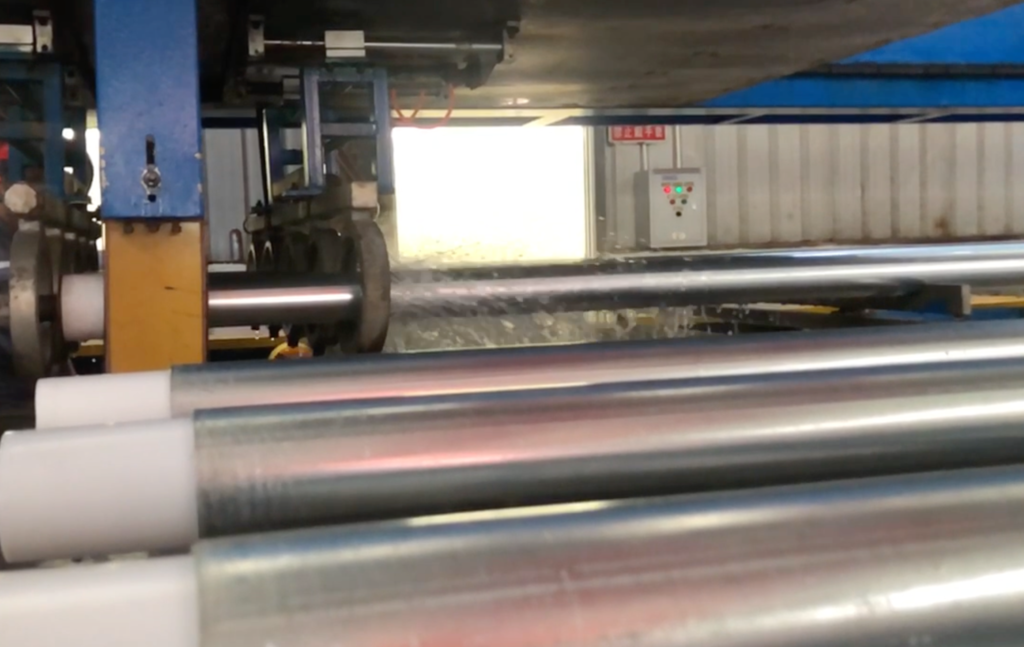
The applicable product standard and purchase order determine the required tests, permitted alternatives, acceptance criteria and documentation. Do not assume that every pipe sold for fire protection has undergone the same test.
The public ASTM A795/A795M summary describes hydrostatic testing and a purchaser-accepted non-destructive electrical alternative. This is not evidence that either test has been performed on a CanHope shipment. Request records linked to the actual supplied material.
- Confirm material identification, pipe standard and grade against the order.
- Check the specified dimensions, finish, end preparation and marking requirements.
- Agree the test method, required coverage and acceptance documents before production or dispatch.
- Match inspection and test records to the relevant heat, lot or other traceability identifier.
- Keep product acceptance separate from the installed system’s inspection and commissioning requirements.
5. Packing and shipment
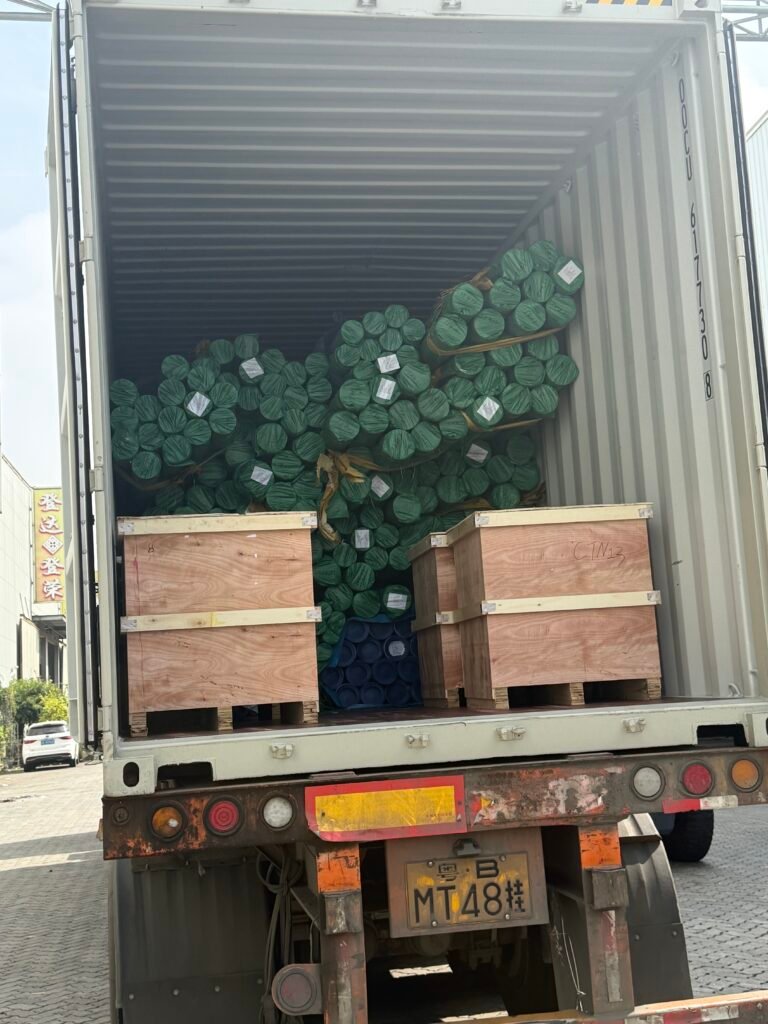
After the agreed acceptance and release steps, the pipes can be prepared for shipment. Check piece counts, lengths, bundle identification, end protection and packing requirements against the order. Loading photographs provide useful visual context but do not replace the packing list or inspection records.
For coordinated purchasing, see our fire-protection materials overview. Identify each required pipe, fitting and other BOQ item separately, including its applicable specification and documentation. Enquiries: info@canhopesteel.com.
6. Frequently asked questions
Are all fire-protection pipes high-frequency welded?
No. The permitted production route depends on the ordered standard and product. Welded and seamless pipe are different manufacturing routes.
Does galvanizing prove that a pipe is suitable for a fire system?
No. Galvanizing is a coating process. Suitability still depends on the pipe specification, joint system, design conditions and any required listing or approval.
What evidence should a buyer request?
Ask for the agreed material and inspection documents, relevant test records, traceability details and any project-required approval evidence. A general process article cannot confirm that a particular order has passed acceptance.