
PN, DN and EN appear in pipe and fitting specifications, but they describe different things. PN is a pressure designation, DN is a nominal-size designation, and EN identifies a European Standard. None of these labels alone is a complete purchasing specification.
Use the exact product standard, material, dimensions and documented service limits together. This guide explains the terminology so that quotation and drawing details are easier to check; it is not a pressure-design calculation.
In this guide
- 1. What does PN mean?
- 2. What does DN mean?
- 3. What does EN mean?
- 4. Other common pipe terms
- 5. Why the distinctions matter
- 6. Frequently asked questions
1. What does PN mean?
PN is a nominal-pressure designation used to identify a pressure-related series of piping components. PN10, PN16 and PN25 are examples of designations, not a universal statement of allowable operating pressure for every product carrying the label.
Do not automatically read PN16 as permission to operate any assembly at 16 bar under all conditions. Check the applicable pressure–temperature table, material, product design and manufacturer limitations. Also check restrictions imposed by the selected seals, connections and complete assembly.
ISO 7268 addresses nominal pressure. Spirax Sarco’s pressure/temperature terminology separately identifies nominal, allowable and operating pressures. The manufacturer reference explains the distinction; its product ratings do not establish ratings for CanHope products.
2. What does DN mean?
DN is a nominal-size designation for pipework components. It is used as a reference size, not as a direct measurement of the internal diameter. A pipe marked DN50 should not be assumed to have an exactly 50 mm bore.
Obtain the actual outside diameter and wall thickness from the applicable product dimension table. The bore depends on those dimensions and their tolerances. Matching nominal-size labels alone does not prove that two ends, threads, flanges or grooves will fit.
ISO 6708 is the reference for definition and selection of DN. Use DN to identify the nominal size, then confirm the physical dimensions in the relevant product table.
3. What does EN mean?
EN means European Standard. It does not mean pipe wall thickness. The CEN-CENELEC explanation of European Standards describes EN as a standard designation. Specify the full reference number, relevant part and edition, not simply “EN pipe”.
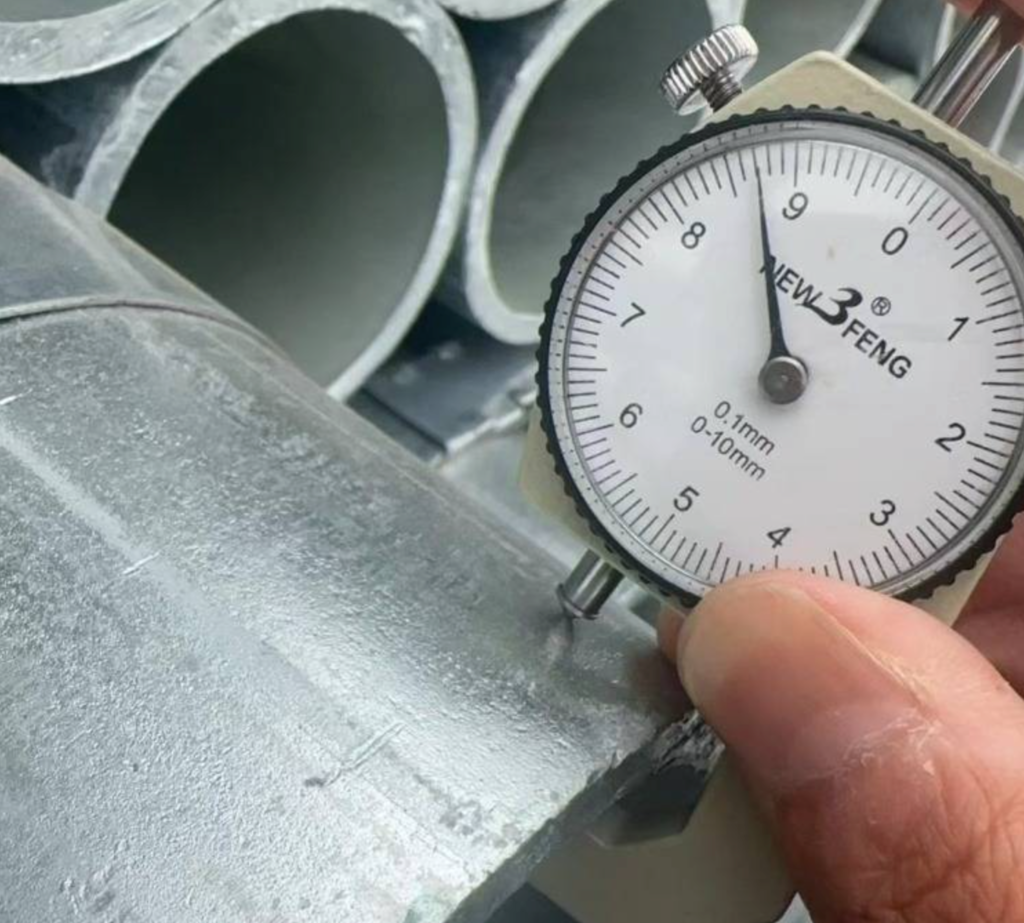
A particular EN product standard may contain dimensional, material or testing requirements. That does not turn the letters EN into a wall-thickness value. State wall thickness separately, with units, or provide the applicable schedule or series and its size-dependent thickness table.
4. Other common pipe terms
| Term | Meaning and purchasing check |
|---|---|
| OD / DE | Outside-diameter notation. Confirm how the drawing defines it, then state the actual dimension and units. |
| ID | Inside diameter or bore. Do not substitute the DN number for a measured or specified ID. |
| Wall thickness / t | A physical dimension, normally stated with units. A schedule or series must be read with the relevant size and standard. |
| CL / Class | A rating-class designation, often used for components under ASME standards. Identify the exact standard and product. |
| HP / MP / LP | High-, medium- and low-pressure labels used in a particular project or process. Ask for numeric design conditions; these labels have no single universal pressure range. |
Class is not a simple PN conversion. For example, ASME B16.5 covers flange and flanged-fitting pressure–temperature ratings as well as materials and dimensions. Converting pressure units cannot establish that a Class-designated flange and a PN-designated flange have compatible drilling, facing or allowable service limits.
5. Why the distinctions matter
Understanding the labels helps prevent incomplete enquiries and mismatched components. It does not, by itself, establish system safety or approval. Before comparing quotations, ask the responsible designer or buyer to complete these fields:
- Product type, exact standard and edition, and material grade.
- Nominal size plus actual OD, wall thickness or referenced schedule/series, and length.
- Design pressure and temperature, fluid/service, and applicable rating tables.
- Connection standard, dimensions and compatible mating components.
- Surface finish, required inspections and any product-specific listing or approval.
For fire-protection projects, keep the pipe specification, product approval and system-design requirements separate. Our fire-protection materials overview can help identify the supply categories; send the completed BOQ and specifications to info@canhopesteel.com.
6. Frequently asked questions
Is DN the same as the internal diameter?
No. DN is a nominal designation. Use the specified dimensional table or verified measurements for the actual bore.
Does EN tell me the wall thickness?
No. EN identifies a European Standard. The full standard and size may lead to a thickness requirement, but thickness must still be stated or looked up separately.
Can PN or Class alone confirm operating pressure?
No. Use the applicable material and pressure–temperature data, the exact product documentation and the complete assembly’s limitations.