

“Fire-protection materials” is a purchasing umbrella, not a single standard package. A water-based piping order, an alarm system and a specialist suppression system have different equipment and documentation needs. The approved fire strategy and design determine what the project actually requires.
This guide explains how to read the main product groups in a material schedule and what to clarify before requesting prices. Use the detailed procurement checklist when you are ready to build a line-by-line enquiry.
In this guide
- 1. Pipe descriptions
- 2. Fittings and connections
- 3. Valve packages
- 4. System-specific equipment
- 5. Define the supply boundary
1. Pipe is a specified product, not just a size
A pipe description should identify the material specification, nominal size and actual outside diameter, wall thickness, length, finish and end preparation. The word “galvanized” describes a finish requirement; it does not by itself identify every other purchasing field or demonstrate acceptance for the intended system.
Start with our galvanized pipe range when that product is specified, but carry the project requirements into the enquiry. Do not assume that galvanized, coated and stainless pipes are interchangeable options for every fire-protection service.
2. Fittings and couplings connect the package
A schedule may include elbows, tees, reducers, couplings and adapters. Record every connection size and the required connection system. For a grooved assembly, the pipe ends, gasket, housing and fasteners form part of the connection described by the manufacturer. Victaulic’s explanation of grooved technology illustrates those elements; it does not establish compatibility or approval for another brand.
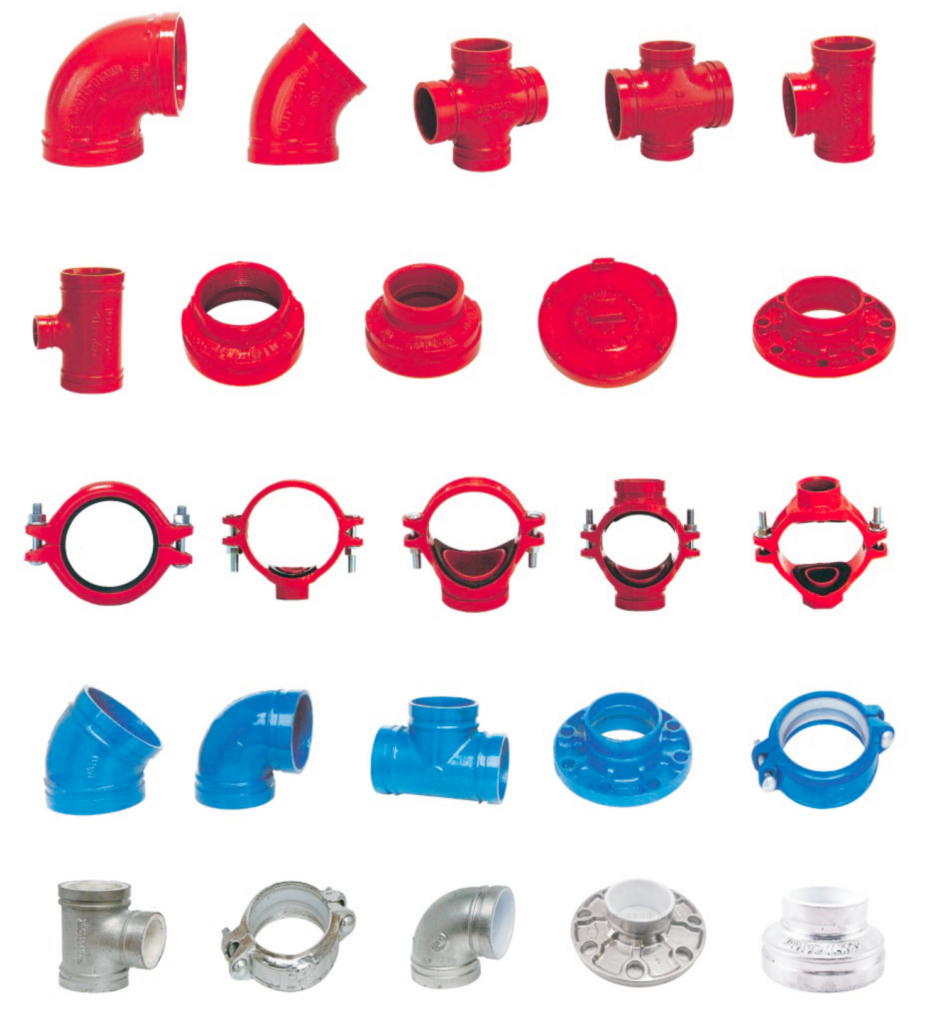
3. “Valve” needs a function and a complete scope
Do not combine every valve into one generic line. Use the approved schedule to identify the function, proposed model, size, end connections, pressure requirement, operator and specified accessories. Clarify which companion items are supplied together and which belong to another package.
Our valve category shows a starting product range. UL/FM options for valves have not been confirmed; no general category-page description should be treated as product approval.
4. Keep system-specific equipment separate
| Package name | What the buyer should obtain |
|---|---|
| Automatic sprinklers | Approved sprinkler and assembly schedules, with the exact products and project submittal requirements. |
| Fire alarm and signaling | Approved device/panel schedules, interface requirements and division of supply, installation and programming responsibilities. |
| Specialist suppression | Designer-approved system requirements and complete manufacturer documentation; do not select a system from a room label alone. |
| Hose equipment or portable extinguishers | The project’s required schedule and acceptance criteria, not a universal add-on list. |
Confirm the codes and editions applicable to the actual destination rather than assuming one reference governs every project. Follow the approved system design and project acceptance requirements.
5. Make the package boundary visible
List supports, fasteners, instruments, drains, electrical work and commissioning responsibilities wherever they appear in the approved documents. Mark each as included, excluded or supplied by another party. A combined product quotation does not automatically include installation or local approval services.
CanHope supports BOQ coordination through its fire-protection supply package, with its own galvanized-pipe manufacturing and related sourcing resources. Email info@canhopesteel.com with the current drawings, material list and destination. Exact models, approval evidence, availability and delivery scope must be confirmed for the proposed order.